
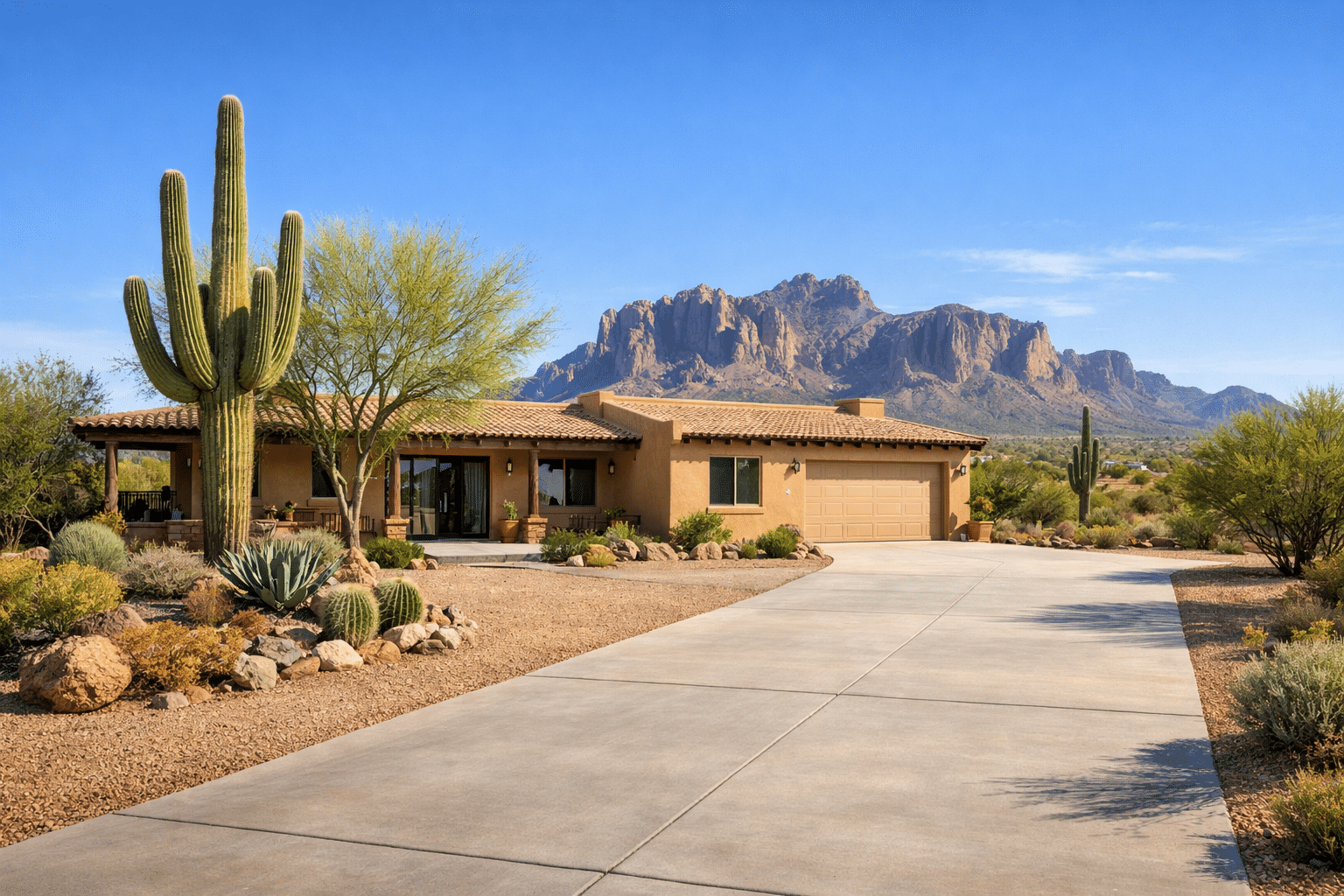
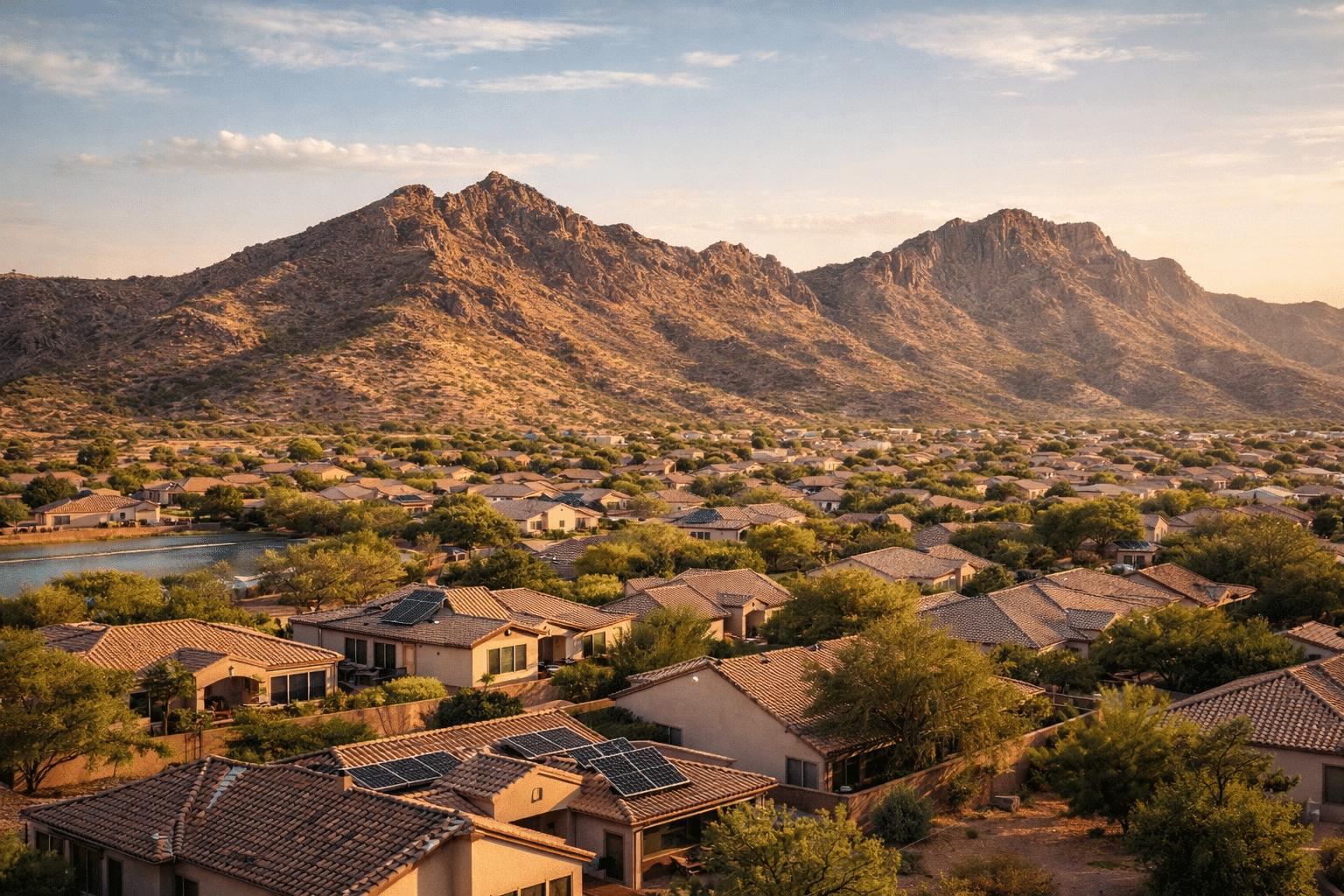

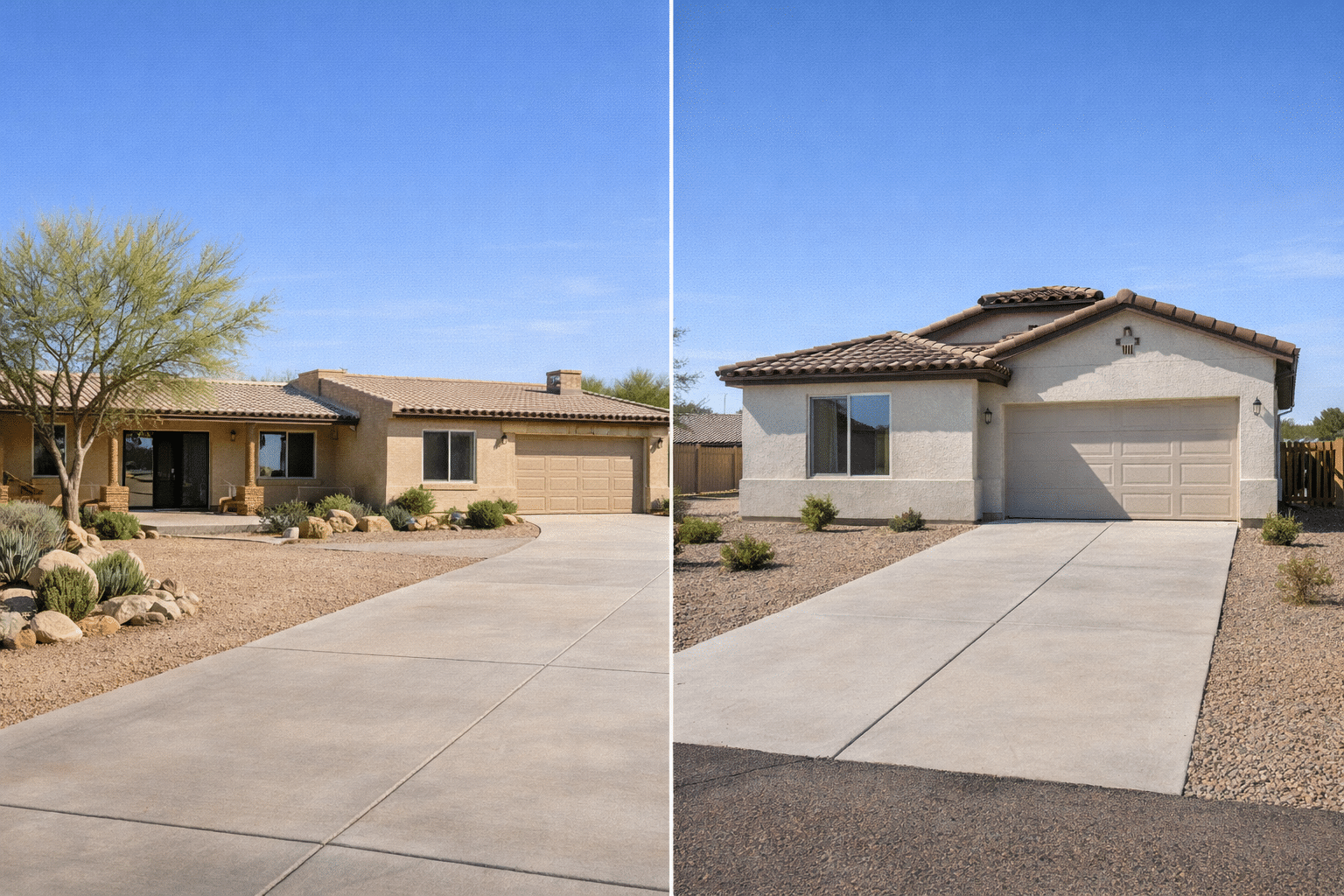
Apache Junction real estate delivers something rare in the East Valley: competitive entry pricing with genuine desert character. Homes for sale in Apache Junction range from compact resale houses on established streets to larger custom builds at the foot of the mountains. The city occupies the eastern edge of the Phoenix metro, where suburban development gives way to open Sonoran Desert. That geography gives buyers a quieter pace, lower price points compared with Mesa or Gilbert, and direct access to hiking, climbing, and state park land. No other city in the East Valley places you this close to both a major highway and true wilderness. The Arizonan Team at West USA Realty covers this market and is ready to help you find the right home here.
Buyers who search Apache Junction real estate listings encounter a market shaped by geography and build decade. The city’s location east of Mesa along the US-60 corridor, just below the Superstition Mountains, creates conditions that differ from every other East Valley submarket. Supply here leans heavily toward older resale homes, and new development is limited. That combination keeps prices below metro-wide averages while giving buyers more land per dollar than most of the Valley can offer.
Price ranges in Apache Junction favor buyers watching their budget. Most resale single-family homes trade in the mid-$200s to upper-$300s, depending on lot size, build decade, and condition. Manufactured homes on owned land occupy the lower end of that range. Newer site-built construction with updated finishes tends to push into the low-$400s. Buyers comparing Apache Junction properties for sale against similar homes in Chandler, Gilbert, or Scottsdale will find a significant per-square-foot advantage here.
Days on market in Apache Junction typically run longer than in higher-density East Valley cities. That pattern benefits buyers. Sellers often show more flexibility on price and terms than you would encounter in faster-moving submarkets. Knowing which listings are priced correctly — and which have sat for a reason — is where working with a knowledgeable agent makes a real difference.
Lot sizes are one of the defining features of Apache Junction homes for sale. Many parcels were platted in the 1970s and 1980s, when half-acre and full-acre lots were standard in this part of the Valley. That stands in contrast to most newer East Valley subdivisions, where quarter-acre lots dominate. ARMLS data consistently shows Apache Junction with a higher proportion of properties on oversized lots than comparable communities to the west.
Buyers comparing this market against home listings in Mesa, Arizona will notice the tradeoffs clearly. Mesa offers tighter commutes and a denser commercial base, while Apache Junction delivers more land for the same or lower price. Buyers researching both areas can review development and zoning context at City of Mesa official information, which covers the community immediately west of Apache Junction.
Investor activity here holds steady. Rental demand is driven by seasonal residents, workers commuting west toward Mesa and Chandler, and families seeking affordable long-term housing. The absorption rate stays moderate — homes move, but sellers should not expect multiple-offer situations as a default.
Apache Junction also draws first-time buyers priced out of Mesa, Gilbert, or Tempe. The tradeoff is a longer commute. Buyers working in central Phoenix, Tempe, or Chandler typically add 20 to 35 minutes each way compared with living closer to those employment centers. For many households, that extra drive time is an acceptable exchange for the price difference and additional land.
Property values in Apache Junction span a wide range by property type and condition. Resale site-built single-family homes typically close in the mid-$200s to upper-$300s. Manufactured homes on owned land generally trade below $250,000. Newer construction with updated finishes reaches the low-$400s and above. These ranges shift with market conditions, so pulling current comparable sales from an active ARMLS search provides the most accurate pricing for any specific address. The Arizonan Team can pull those figures and walk you through what they mean for any property under consideration.
The US-60 is the main artery connecting Apache Junction to the rest of the Valley. Drive west and you reach Mesa in roughly 20 minutes under normal traffic conditions. Drive east and the highway narrows, development thins, and open desert takes over quickly. That transition is not accidental — this community chose slower growth, and the streets reflect it compared with cities further west.
Central Apache Junction is a mix of commercial corridor, single-family residential neighborhoods, and open desert in close proximity. There is no traditional downtown grid. The community organizes around a few major cross streets — Superstition Boulevard and Apache Trail — with older neighborhoods spread north and south of the highway. Grocery stores, medical offices, and a handful of restaurants anchor the main service road stretches along the US-60.
Buyers evaluating their options across the broader East Valley will find a different character to the north: East Valley real estate in Fountain Hills offers a distinct setting and price range that provides a useful contrast for buyers deciding between these two sides of the metro.
Lost Dutchman State Park sits at the northern edge of Apache Junction. Residents use it regularly — morning hikes, trail runs, weekend camping. The park’s trails connect to the broader Superstition Wilderness, which extends through thousands of acres of roadless desert. That access is a practical part of daily life here, not just a listed amenity.
Newer residents often note that Apache Junction provides fewer services than Mesa or Chandler. Banner Goldfield Medical Center serves the immediate area. Major hospitals and specialty care facilities are a 20-to-30-minute drive west. That distance is a real factor for buyers who depend on frequent medical services, and it belongs in any honest assessment of the location.
The local food and retail scene is functional, not destination-oriented. Most residents make major shopping runs to Mesa or to the newer strip centers on Superstition Boulevard. Walkable commercial districts and specialty grocers are limited within city limits. Buyers who rely on those amenities daily should factor that honestly before committing to this market.
Maricopa County records — including property ownership history and assessed values — are available through the county assessor’s online portal. Apache Junction straddles both Maricopa and Pinal county lines, so buyers should confirm which county holds jurisdiction over a specific property address. That distinction affects school boundaries, property tax assessments, and which county offices handle related services.
Apache Junction has drawn retirees for decades, and that demographic remains visible throughout the housing market. Lower price points, warm winters, direct desert access, and several established active adult communities make the area practical for buyers on fixed incomes who want space without paying resort-area prices. Several age-restricted communities operate within city limits and in the surrounding unincorporated areas. Buyers should verify HOA fees, age restrictions, and community rules for any specific neighborhood of interest.
Monthly housing costs here run below the Phoenix metro average for most buyers, particularly in older HOA-free neighborhoods. The city’s smaller scale also means that civic life — parks boards, city council meetings, neighborhood planning sessions — is accessible in a way that larger municipalities rarely allow. For buyers who want to be active locally as well as outdoors, that scale is a meaningful quality-of-life factor.
Families evaluating Apache Junction for a move should begin with a clear picture of the district structure. Most of the city falls within the Apache Junction Unified School District, which serves students from kindergarten through 12th grade. The district operates several elementary campuses, two middle schools, and Apache Junction High School as the primary secondary institution. Campus boundaries can shift over time, and families should confirm the specific assignment for any address of interest before making a purchase decision.
The district has a mid-size suburban character, serving a mix of long-term residents and newer families. Families should contact the district directly for current enrollment procedures, boundary maps, and available school choice options. The Maricopa County Department of Education and the Pinal County School Superintendent’s office both provide address-based boundary lookup tools for properties near the county line.
Current community event schedules, recreational programming information, and city service contacts are available through Apache Junction city services and community programs. Families new to the area can use this resource to identify parks, youth programs, and local services well before finalizing a purchase.
Private school options exist in Apache Junction but are limited within city limits. A broader range of private and charter campuses is available within 20 to 30 minutes west, in Mesa and Chandler. Charter school availability along the East Valley US-60 corridor has expanded over the past several years.
Community events in Apache Junction reflect the mix of long-term residents, seasonal visitors, and younger families who have arrived more recently. The city’s smaller scale makes civic participation accessible — school board meetings, parks commission sessions, and planning hearings are typically low-attendance and open to any resident. For buyers who place value on direct community involvement, that access is easier to achieve here than in a larger municipality.
The Apache Junction Unified School District covers most of Apache Junction’s city limits and portions of the surrounding unincorporated area. Boundary lines can vary by address, especially near the city’s outer edges and near the Maricopa-Pinal county line. Both the district website and the Maricopa County Department of Education offer address-based boundary lookup tools. Confirming the school assignment for any specific property before signing a purchase contract is a straightforward step — your agent can facilitate that check during due diligence. Charter and private school options within a reasonable drive add flexibility for families who want choices beyond the public district.
Three distinct categories of housing define Apache Junction’s inventory, and understanding each helps buyers focus on what is actually available at their price point.
Site-built single-family homes make up the largest share of the market. Most were constructed between the 1960s and the early 2000s. Ranch-style floor plans on generous lots dominate older neighborhoods. Buyers typically find two- and three-bedroom homes with full garages, covered patios, and block construction as the standard configuration. The condition range is wide — some properties have been maintained carefully across multiple ownership cycles, while others reflect years of deferred upkeep. Budgeting for a professional home inspection and potential repairs is not optional here. It is a practical step that protects buyers in a market where condition variance is real.
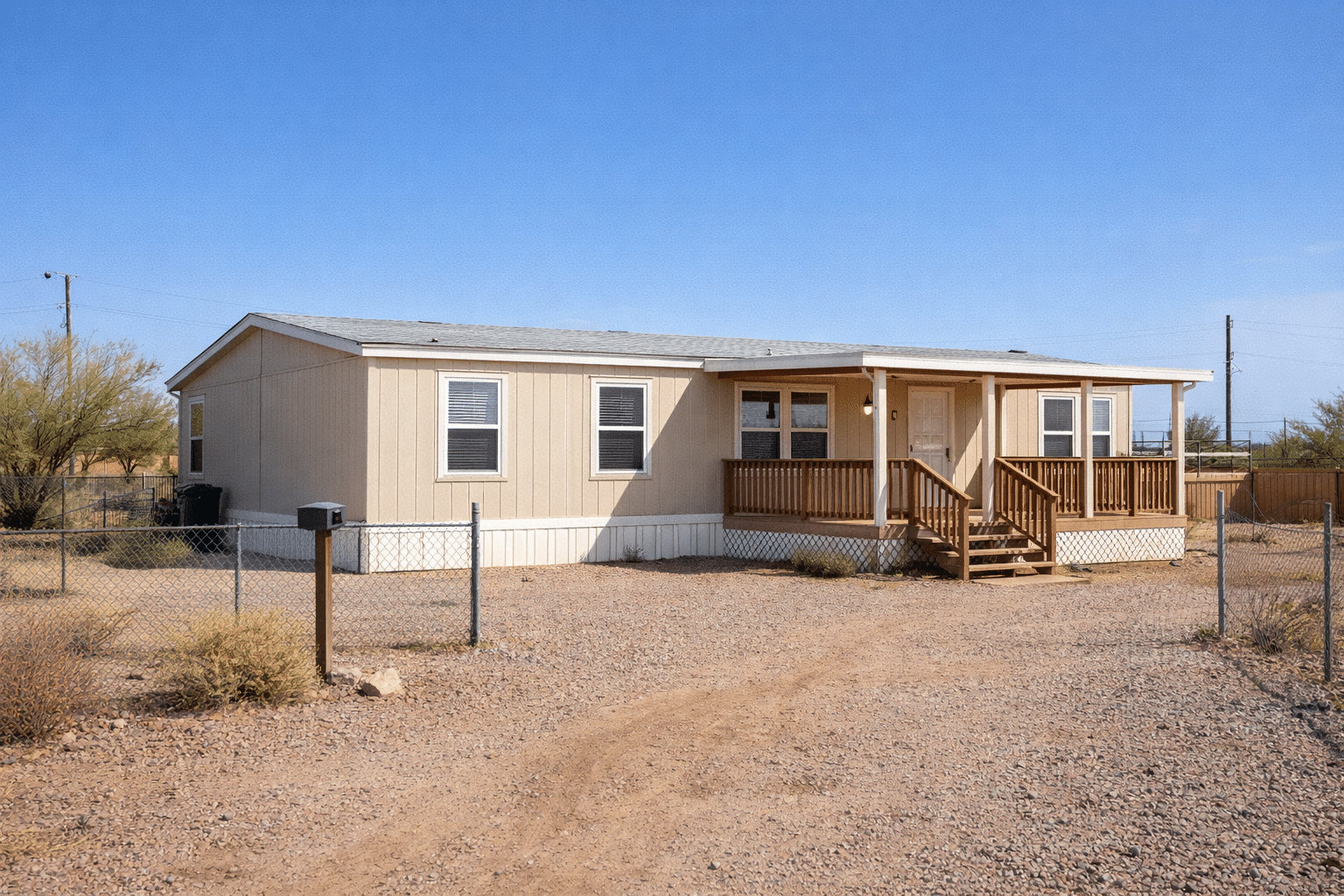
Manufactured homes on owned land represent a meaningful portion of Apache Junction’s housing inventory. This category draws buyers who prioritize maximum space and low overhead over conventional construction. Manufactured homes on fee-simple lots can be financed through conventional and FHA programs, though lenders maintain specific requirements for this property type. A mortgage pre-approval that accounts for the specific property class prevents delays at the offer stage.
New construction in Apache Junction is limited compared with neighboring communities to the south and east. A small number of builders operate on infill lots and within a few planned developments inside city limits. Buyers who prioritize new construction will find more concentrated inventory by widening their search to adjacent growth corridors.
San Tan Valley properties for sale represent one such corridor worth exploring. Builder activity and new-construction inventory are considerably more extensive there than within Apache Junction proper.
The absence of HOA obligations in many Apache Junction neighborhoods is worth noting for buyers who have spent their search in more tightly governed communities. Older subdivisions here were platted before mandatory HOA structures became standard, leaving many neighborhoods with no recorded deed restrictions. Buyers should still review CC&Rs and title reports carefully — some older neighborhoods carry informal deed restrictions or easements that do not surface through a standard HOA disclosure.
New construction exists in Apache Junction but is not the market’s primary offering. The inventory here leans heavily toward resale homes on established lots. Builders who do operate within city limits tend to focus on smaller, entry-level floor plans rather than the large master-planned communities common in newer East Valley growth areas. Buyers specifically seeking new construction should expand their search to communities where builder activity is more concentrated. The Arizonan Team tracks active builder communities across the East Valley and can present current options across this part of the metro.
Purchasing a home in Apache Junction follows the same core sequence as any Arizona real estate transaction. A few local factors are worth understanding before you begin.
The Apache Junction market carries more property type variety than most East Valley cities. Site-built resale homes, manufactured homes on owned land, and limited new construction all appear in active inventory. Each type comes with different financing requirements and different inspection priorities. Clarifying which type fits your financing situation before you start touring saves time and prevents surprises at the lender stage.
Steps in the process:
Get pre-approved. A pre-approval letter is standard before most Arizona sellers will accept an offer. If financing a manufactured home, confirm that your lender handles this specific property class before selecting a property to tour.
Define your search criteria. Decide on lot size preferences, distance from the US-60, and your tolerance for older versus updated homes. Your agent should filter ARMLS listings by those parameters so you tour only relevant properties from the start.
Tour properties. Apache Junction is compact enough that most active listings are within a short drive of each other. Budget extra time for properties in unincorporated areas east of city limits, where road conditions and access vary more than within city boundaries.
Submit an offer. Your agent prepares a purchase contract using Arizona Association of Realtors forms. The offer includes your purchase price, earnest money deposit, contingencies, and a proposed close of escrow date.
Open escrow and complete inspections. A licensed inspector covers structure, roof, HVAC, electrical, and plumbing. For manufactured homes, add a specific review of the foundation system and tie-down hardware. Your title company conducts an ownership history search and reviews any recorded easements, liens, or HOA obligations against the property.
Close on your new home. You sign final documents at or through your title company, wire remaining funds, and receive keys. Standard Arizona residential purchases close in 30 to 45 days from an accepted offer.
Closing costs in Arizona typically run 1 to 3 percent of the purchase price for buyers, covering lender fees, title insurance, and prepaid items. Your lender provides a Loan Estimate that breaks down these figures after pre-approval. The Arizonan Team guides buyers through each stage and can refer you to inspectors, lenders, and title contacts who work this market regularly.
Property values in Apache Junction vary significantly by type and condition. Resale site-built single-family homes typically close in the mid-$200s to upper-$300s. Manufactured homes on owned land generally trade below $250,000. Newer construction with updated finishes reaches the low-$400s and above. Current comparable sales pulled from a live ARMLS search will give the most accurate pricing for any specific address — the Arizonan Team can provide those on request.
New construction is available in Apache Junction but is limited compared with neighboring communities. Most inventory here consists of resale homes on established lots. A small number of builders operate on infill lots and within a few planned developments. Buyers prioritizing new construction should also search nearby communities where builder activity is more concentrated, including homes for sale near Florence and San Tan Valley.
Apache Junction Unified School District covers most of the city’s limits and portions of the surrounding unincorporated area. Boundaries vary by address, particularly near the outer edges of the city and near the Maricopa-Pinal county line. Both the district website and the Maricopa County Department of Education provide address-based boundary tools. Verifying the school assignment for any specific property before signing a purchase contract is a practical step your agent can facilitate.
Many buyers choose Apache Junction specifically for retirement, and the market reflects that demand. Lower prices, warm winters, direct desert access, and several established active adult communities make the area practical for fixed-income buyers who want space without resort-area price tags. Monthly costs here run below the Phoenix metro average, particularly for buyers in older HOA-free neighborhoods. Confirming HOA status, age restrictions, and proximity to medical services for any specific community is worth doing early in your search.
Many Apache Junction neighborhoods carry no HOA at all. Older subdivisions platted before HOA-mandatory development became standard often have no deed restrictions or community fees. Some newer developments and active adult communities do maintain HOAs, with varying fees and governing rules. Confirming HOA status for any specific property before submitting an offer is important, since this detail directly affects your monthly housing cost calculation.
Apache Junction sits approximately 35 to 40 miles east of downtown Phoenix via the US-60. Under typical daytime traffic, that commute runs 45 to 60 minutes. Morning and afternoon peak-hour traffic can add significant time, particularly on the Superstition Freeway section west of Mesa. Buyers who commute regularly to Phoenix, Tempe, or Chandler should test the drive at their actual commute times before finalizing a purchase decision.
Property taxes in Apache Junction follow Maricopa County or Pinal County procedures depending on which part of the city a property falls in, since the city straddles both county lines. Tax rates in both counties fall within the moderate range for Arizona. Actual amounts depend on assessed value, property classification, and any applicable exemptions. Both county assessor websites provide current rate tables, and your title company will include a property tax estimate in your closing disclosure.

Home prices range from the mid $200,000s to over $800,000, offering options for various budgets and lifestyle preferences. Properties include traditional single-family homes, manufactured homes, and larger estate properties on acreage parcels. Market trends show steady appreciation, particularly for properties with mountain views or desert landscaping features. New construction continues in designated growth areas, with several developers offering contemporary desert-adapted designs. The market attracts both primary residents and seasonal buyers seeking authentic Southwest living experiences. Current inventory typically moves within 30-45 days for well-priced properties in desirable locations.

The Apache Junction Unified School District serves the community with a focus on personalized education approaches. Central Arizona College maintains a local campus, providing higher education opportunities and workforce development programs. Several charter schools offer alternative education options, including innovative STEM and arts-focused curricula. The district's partnership with East Valley Institute of Technology provides advanced technical training opportunities. Special education services receive strong support through both district programs and specialized facilities. Local schools maintain active community involvement through various outreach and enrichment programs.

The Superstition Shadows Aquatic Center provides year-round swimming and recreation opportunities for residents. Multiple community parks feature sports facilities, including Prospector Park's comprehensive athletic complex and event spaces. The Multi-Generational Center offers diverse programming for all ages, from fitness classes to social activities. Trail systems connect neighborhoods to natural areas and recreational facilities throughout the community. The Apache Junction Public Library serves as a cultural hub with extensive programs and resources. Local golf courses include the Superstition Mountain Golf and Country Club with two championship courses.

The Apache Junction Marketplace and Superstition Gateway provide convenient local shopping options for daily needs. Historic Goldfield Ghost Town offers unique dining and entertainment experiences just minutes from residential areas. Local restaurants range from casual Southwest cuisine to upscale dining establishments with mountain views. The Superstition Mountain Museum preserves regional history through exhibits and educational programs. Multiple entertainment venues within easy reach include the Arizona Renaissance Festival grounds and rodeo facilities. Shopping options expand significantly with Mesa Marketplace and Superstition Springs Center nearby.

U.S. Highway 60 provides direct access to the greater Phoenix metropolitan area and employment centers. Public transportation options include CART (Central Arizona Regional Transit) connecting to Valley Metro services. The recently improved State Route 88 (Apache Trail) offers scenic access to recreational areas. Average commute times to central Mesa employment areas range from 25-35 minutes during peak hours. Phoenix-Mesa Gateway Airport lies within 30 minutes, offering convenient regional flight options. Local road improvements continue expanding capacity while preserving the area's character.

The Apache Junction Police Department maintains strong community presence with regular patrols and quick response times. Fire protection services include strategic station locations ensuring rapid emergency response throughout the community. Crime rates remain consistently below metropolitan Phoenix averages, reflecting strong community engagement in safety programs. The city's emergency management team coordinates closely with county and state resources during seasonal weather events. Active neighborhood watch programs contribute to community safety and awareness. Modern emergency communication systems provide reliable coverage throughout the service area.

Banner Goldfield Medical Center provides comprehensive healthcare services, including 24-hour emergency care in Apache Junction. Mountain Vista Medical Center offers additional medical services within a 20-minute drive of most residential areas. Multiple urgent care facilities serve the community, including NextCare and FastMed, providing extended hours coverage. Several medical plazas house specialist practices, ensuring access to diverse healthcare options close to home. Air evacuation services maintain ready status for rapid transport to advanced care facilities when needed. The Apache Junction Fire District operates multiple stations strategically placed throughout the service area.

The Superstition Mountains provide extensive hiking and outdoor recreation opportunities directly from the community. Lost Dutchman State Park offers developed camping facilities and interpretive programs highlighting regional natural history. Multiple trail systems accommodate various skill levels, from casual walks to challenging mountain ascents. Community programs include guided hikes, nature education, and outdoor fitness activities throughout the year. Local stables provide horseback riding opportunities, maintaining the area's Western heritage and outdoor traditions. The nearby Tonto National Forest expands recreational options with vast public lands access.

The annual Lost Dutchman Days celebration brings rodeo competitions and Western heritage events to the community. Regular farmers markets and craft fairs showcase local products and artisan works throughout the season. Community organizations coordinate various social activities, from music in the park to seasonal festivals. Active senior programs provide numerous engagement opportunities for the retirement community. Youth programs include sports leagues, scouting activities, and educational enrichment through local partnerships. The Chamber of Commerce coordinates business networking and community development initiatives.

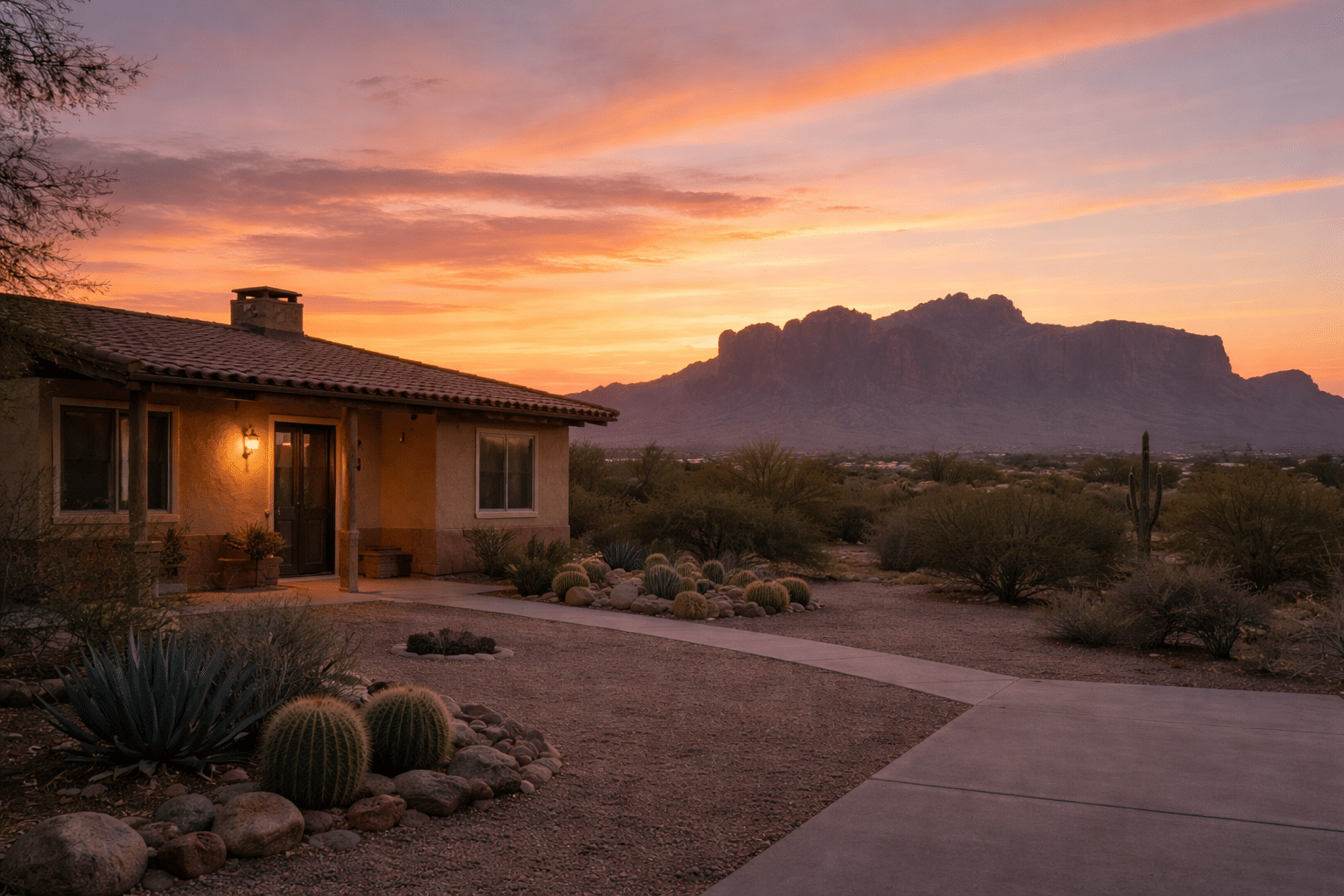
The high desert location provides slightly cooler temperatures than central Phoenix, especially during evening hours. Winter temperatures typically range from 40 to 70 degrees, ideal for outdoor activities and desert exploration. Summer highs average around 103 degrees, moderated by lower humidity and afternoon breezes. Annual rainfall averages 10 inches, supporting diverse desert vegetation and seasonal wildflower displays. The area experiences dramatic monsoon storms during summer months, contributing to the dynamic desert environment. Clear skies predominate, offering excellent stargazing opportunities and spectacular sunset views.

Zoning regulations protect residential areas while supporting appropriate commercial development along major corridors. Building codes address desert construction requirements and energy efficiency standards appropriate for the climate. Flood control systems manage seasonal water flow through established wash systems and retention areas. Fire prevention measures include strict building standards and landscape management requirements in interface areas. Environmental protection measures preserve critical desert habitat while allowing responsible development. Regular safety inspections ensure compliance with current codes and community standards.

Major employers include Banner Goldfield Medical Center, Apache Junction Unified School District, and various retail centers. Tourism-related businesses provide significant employment opportunities, particularly during the winter season. The construction and home services sectors maintain steady growth supporting community development. Small businesses form a crucial part of the local economy, with strong support from community organizations. Recent economic development initiatives focus on attracting diverse industries to expand employment options. The proximity to Phoenix-Mesa Gateway Airport corridor provides additional job opportunities.

Property taxes remain lower than many Phoenix metropolitan communities, attracting both residents and businesses. Utility costs benefit from solar opportunities and energy-efficient construction options in newer developments. Municipal services maintain reasonable rates through efficient management and regional cooperation agreements. Insurance rates reflect the area's safety record and construction quality standards. Property values show consistent appreciation, particularly for homes with mountain views or premium locations. Many properties offer potential for value-adding improvements and custom modifications.

The City of Apache Junction provides comprehensive municipal services through professional staff and elected leadership. Public works projects receive consistent funding, ensuring well-maintained infrastructure throughout the community. The planning department coordinates future development to protect natural resources and community character. Local government actively engages residents through various committees and public participation opportunities. Municipal services include regular maintenance of public spaces and comprehensive recycling programs. The city's general plan emphasizes sustainable growth while preserving the area's unique character.
The Arizonan Team covers Apache Junction real estate and the broader East Valley communities that surround it. Buyers who have questions about specific neighborhoods, property types, or active listings can reach us directly at arizonan.com. We work with buyers at every stage — from first search to signed contract to closing day.
Apache Junction rewards buyers who understand the market. The price-per-square-foot opportunity here is real. So is the tradeoff in commute time and available services. The right home in this market is one that fits both your budget and your daily routine. Our team can help you match those factors to the right property in Apache Junction real estate.
We use cookies to improve your experience on our site. By using our site, you consent to cookies.
Manage your cookie preferences below:
Essential cookies enable basic functions and are necessary for the proper function of the website.
You can find more information in our Cookie Policy.