

Phoenix real estate offers one of the most diverse housing markets in the American Southwest, with Phoenix homes for sale ranging from sub-$300,000 entry-level properties to multi-million-dollar Phoenix luxury homes along the Arcadia and Biltmore corridors.
The Phoenix AZ real estate market serves a metropolitan area of more than 1.6 million city residents — and a broader Maricopa County population approaching 5 million. Understanding the Phoenix housing market means recognizing the city’s scale: 500 square miles of Sonoran Desert terrain divided into distinct residential corridors, each with its own price range, lifestyle profile, and community character.
Homes for sale in Phoenix Arizona span every buyer type — young professionals seeking proximity to the Downtown and Midtown light-rail corridor, growing families prioritizing top-rated school districts in northeast Phoenix and the East Valley, empty-nesters drawn to low-maintenance master-planned communities in the northwest valley, and investors identifying long-term appreciation opportunities across the metro.
As your Phoenix realtor and Associate Broker with West USA Realty, Carl Chapman brings more than four decades of Arizona market experience to every transaction, combining deep neighborhood knowledge with full access to the Arizona Regional MLS — explore our home buyer resources to start your search.
Phoenix stands as one of America’s most dynamic metropolitan areas, combining urban sophistication, Sonoran Desert beauty, and a business climate that draws families, investors, and professionals from across the country.
West USA Realty has watched Phoenix evolve over more than 40 years of active brokerage — from a regional desert hub into a nationally recognized destination where new master-planned communities rise alongside established neighborhoods with decades of character.
As your dedicated Phoenix realtor, the Arizonan Team at West USA Realty provides full access to the Arizona Regional MLS — every active listing across the greater Phoenix area, filtered to match your lifestyle, budget, and neighborhood priorities.
The city’s reach across Maricopa County is remarkable. From the tree-lined blocks of the Arcadia and Biltmore corridors to the sprawling hillside custom estates near North Mountain, Phoenix offers a residential spectrum that accommodates virtually every lifestyle and budget. Young professionals cluster near the light rail corridors in Midtown and Downtown. Growing families gravitate toward established neighborhoods served by top-rated districts like Paradise Valley Unified and Deer Valley Unified. Empty-nesters and retirees seek the low-maintenance resort living found in master-planned communities across the northwest and southwest valleys.
Navigating the Phoenix market requires an expert who understands the diverse landscape of Maricopa County. Whether you are looking for condos in the East Valley or a single-family home near the Camelback area, our real estate brokerage provides the information you need.
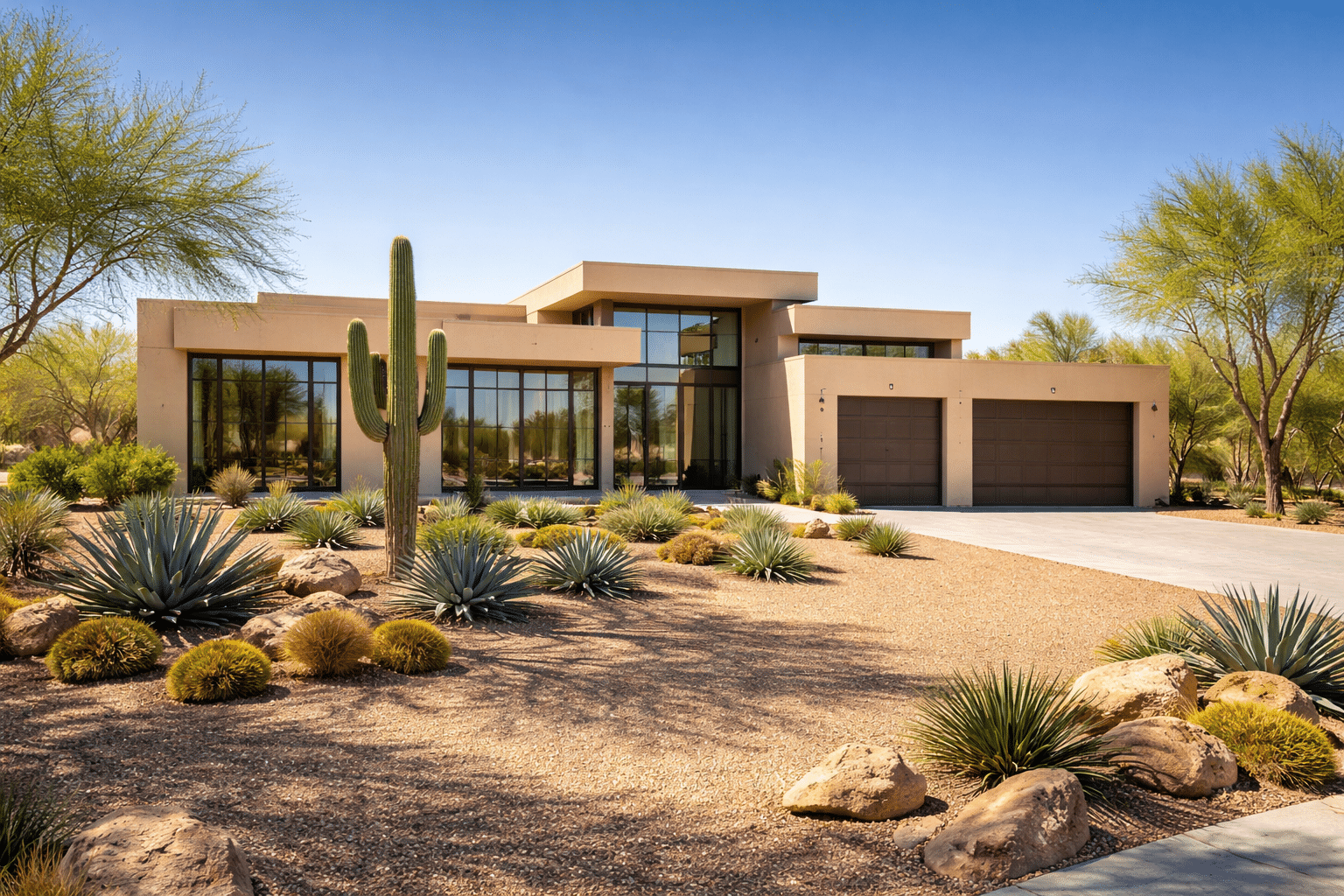
Phoenix’s residential landscape reflects decades of sustained growth, shaped by some of the nation’s most respected builders working across a wide range of price points, architectural styles, and community types.
Shea Homes maintains a strong presence throughout the metro, with communities in Cave Creek, Chandler, Mesa, Paradise Valley, Peoria, Queen Creek, and Scottsdale. Their Trilogy brand targets 55+ and all-ages resort-style living with amenity-rich clubhouses and low-maintenance designs. K. Hovnanian brings more than six decades of national homebuilding experience to Phoenix, delivering thoughtfully planned communities with energy-efficient construction that performs well in the desert climate. David Weekley Homes offers award-winning new construction with extensive Custom Choices programs covering both exterior and interior selections, building on diverse homesites throughout the valley.
Fulton Homes is one of Arizona’s largest privately held builders, known for value-driven construction and long-standing community relationships. Ashton Woods merges top-tier craftsmanship with intentional design, with communities distributed from Marley Park in Surprise to Gilbert and Mesa in the East Valley. Brightland Homes focuses on affordability with mountain-view homesites across communities in Buckeye and Gold Canyon. Dream Finders Homes has expanded into the Phoenix market with developments in Goodyear, Surprise, Mesa, and San Tan Valley, offering competitively priced new construction.
Architecturally, Phoenix spans a wide range — from contemporary desert modernism with flat roofs, clean lines, and native landscaping to Spanish-influenced Territorial and Tuscan styles common in master-planned developments. Luxury custom homes in Arcadia, Biltmore Estates, and Moon Valley blend classic Southwestern elements with modern open floor plans. Master-planned developers like DMB Associates and Sunbelt Holdings continue shaping the valley’s most prestigious communities, ensuring that quality, scale, and long-term planning are built into every phase.

Phoenix AZ communities divide naturally by corridor, and the corridor determines price point, commute pattern, school district, and lifestyle profile more reliably than any city-wide average.
In central Phoenix, Biltmore Estates anchors the Camelback Corridor luxury tier — an established enclave of custom and semi-custom homes where architectural quality, mature landscaping, and walkable proximity to Biltmore Fashion Park consistently command prices well above the city median. Arcadia sits immediately east and delivers similar prestige with a more eclectic custom-build character. Coral Gables Estates offers a quieter, tree-lined alternative within the central corridor for buyers who want established character without Biltmore’s price premium.
The north corridor along the I-17 and Loop 101 encompasses some of the metro’s most diverse community options. Desert Ridge in far north Phoenix positions buyers near the Desert Ridge Marketplace retail hub and the rapidly developing 85054 zip code. Moon Valley offers an established golf-course community with large lots and a tight-knit neighborhood character that newer master-planned communities cannot replicate. Tatum Highlands and Paradise Valley Village appeal to northeast Phoenix buyers prioritizing Paradise Valley Unified school access and mountain-view homesites at price points below the Paradise Valley town boundary.
Along the I-17 northwest corridor, Sonoran Foothills delivers master-planned living with North Mountain views and HOA amenities at competitive prices. On Phoenix’s south edge, Ahwatukee Foothills encompasses Ahwatukee Custom Estates and Echo Canyon — communities adjacent to South Mountain Park that draw buyers seeking trail access and a self-contained neighborhood feel within city limits.

Selling a home in Phoenix AZ in 2026 requires a more deliberate approach than the market demanded two years ago. Current data places the median sold price for Phoenix single-family homes between $461,000 and $481,500 depending on the timeframe and source — a year-over-year decline of approximately 2 to 5 percent from 2025 levels. Homes are averaging 62 to 67 days on market, the sale-to-list ratio sits near 96.65 percent, and nearly two-thirds of Phoenix listings have carried at least one price reduction before going under contract. These are not signals of a distressed market — they are signals of a market that has rebalanced and now rewards sellers who price accurately from day one.
Phoenix’s scale — 500 square miles and dozens of distinct submarkets — means that city-wide figures are directional only. The correct list price for a custom estate in Biltmore Estates or Arcadia is determined by Arcadia comparables, not metro averages. A resale home in Desert Ridge competes against active new construction in north Phoenix at a price-per-square-foot level that requires a current ARMLS pull of both resale and builder closings — not a Zestimate. Sellers who price against their corridor’s actual closed sales consistently close faster and with fewer concessions than those who anchor to peak-era estimates.
Seller concessions — rate buydowns and closing cost contributions — remain the most effective negotiating tool in the current Phoenix housing market because they address the buyer’s monthly payment directly without establishing a lower price anchor for future appraisals. Pre-listing preparation, professional photography, and targeted presentation across active buyer segments shorten days on market at every price tier in Maricopa County. The Phoenix home sellers guide at West USA Realty covers comparative market analysis, listing strategy, and what to expect in the offer and negotiation process under current market conditions.

Phoenix’s outdoor recreation offerings are anchored by some of the Southwest’s most spectacular natural preserves and a municipal park system that rivals any major American city.
South Mountain Park and Preserve is one of the largest municipally managed parks in the United States, spanning more than 16,000 acres across the Ma Ha Tauk, Gila, and Guadalupe mountain ranges. It offers more than 58 miles of trails for hiking, mountain biking, and equestrian use, with Dobbins Lookout delivering panoramic views of the Phoenix skyline from 2,330 feet. Popular routes include the Mormon Trail, Telegraph Pass Trail, Desert Classic Trail, and the Holbert Trail — options for hikers from casual walkers to serious trekkers.
Camelback Mountain, positioned near the heart of the city, is among the most recognized hiking destinations in the country. The Echo Canyon and Cholla trails draw thousands of visitors year-round, with the summit offering views across the entire Valley of the Sun. Papago Park, situated minutes from downtown and Sky Harbor International Airport, combines the Desert Botanical Garden — home to over 50,000 arid plants across five thematic trails — with fishing lagoons, picnic areas, and the Phoenix Zoo, making it one of the valley’s most versatile recreational destinations.
Phoenix is widely regarded as one of the premier golf destinations in the world, with a concentration of public and private courses unmatched in the American Southwest.
Papago Golf Course, designed by William Francis Bell (also the designer of San Diego’s Torrey Pines), now serves as the home course for Arizona State University’s men’s and women’s golf programs. Its location within Papago Park frames play against views of the iconic red buttes, Camelback Mountain, and the downtown skyline.
Arizona Grand Golf Course offers a par-71 championship layout recognized by Golf Digest with four stars, featuring dramatic elevation changes and mountain views throughout. The city’s municipal system includes Aguila, Cave Creek, Encanto, Palo Verde, and GCU golf courses. Encanto Golf Course, built in 1935, holds the distinction of being Arizona’s third-oldest golf course.
Quintero Golf Club, designed by Rees Jones, consistently earns recognition from Golf Digest and GolfWeek as one of Arizona’s top public courses. For those seeking private club experiences, the Arizona Country Club, Phoenix Country Club, and several resort-affiliated courses provide exclusive options throughout the metro.
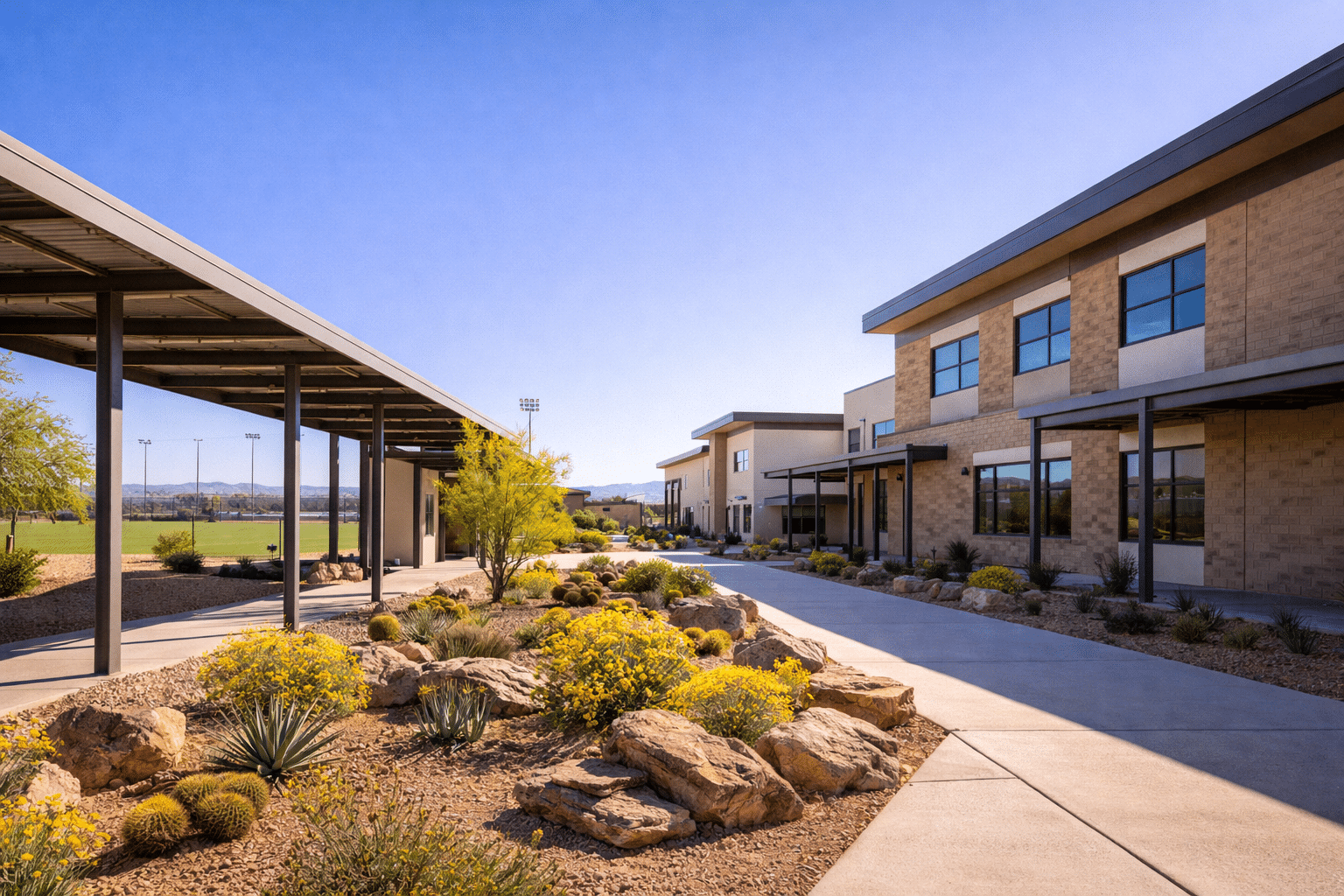
Phoenix is served by multiple highly regarded school districts that offer families a broad range of public, charter, and private educational pathways.
Paradise Valley Unified School District (PVSchools) serves northeast Phoenix and portions of north Scottsdale, operating 28 elementary schools, seven middle schools, five high schools, two alternative schools, and an online school across 98 square miles. The district serves more than 32,000 students and consistently earns strong academic performance ratings. Scottsdale Unified School District (SUSD), with over 125 years of continuous operation, serves 21,000 students across 29 physical campuses. Recent Arizona Educational Foundation A+ Schools of Excellence designations recognized Hohokam Elementary, Navajo Elementary, and Pueblo Elementary within SUSD.
Deer Valley Unified School District serves more than 33,000 students across 42 schools in northwest Phoenix and portions of Glendale and Peoria. Kyrene Elementary School District serves approximately 14,400 students across 26 schools in south-central Tempe and Chandler, with a strong reputation for academic programming. Washington Elementary School District, based in northwest Phoenix and Glendale, serves nearly 20,000 students across 33 schools.
Private school options in Phoenix include nationally respected institutions such as Brophy College Preparatory and Xavier College Preparatory, both of which offer rigorous academic tracks and extensive extracurricular programming. Several districts also offer Mandarin Dual Language Immersion programs, Advanced Placement course sequences, and specialized STEM academies as part of their comprehensive educational offerings.
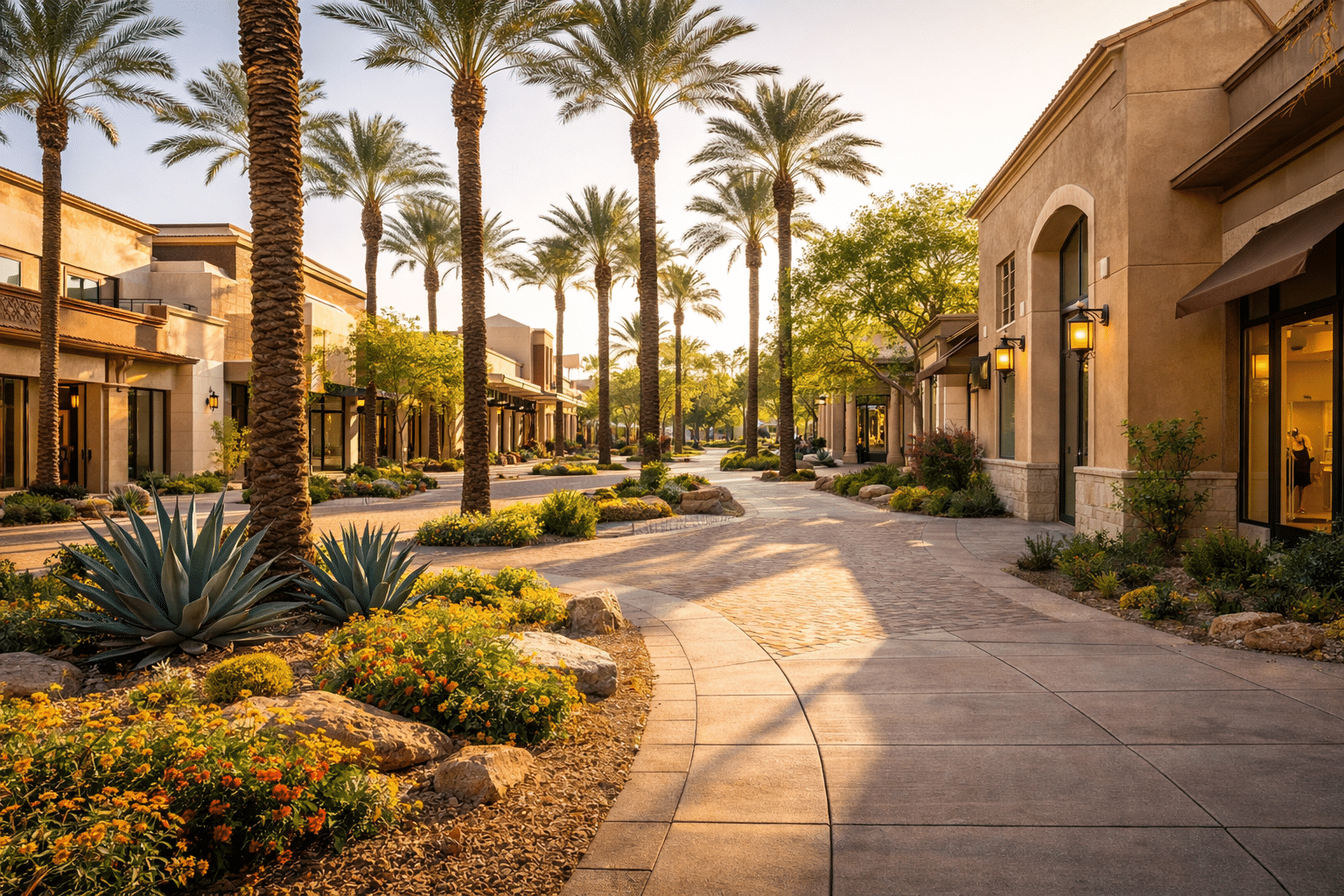
Phoenix’s retail landscape encompasses everything from regional power centers and luxury lifestyle destinations to independent boutiques and local artisan markets.
Biltmore Fashion Park is regarded as the crown jewel of Arizona retail, featuring the state’s only Saks Fifth Avenue alongside Brooks Brothers, Ralph Lauren, Anthropologie, Lululemon, and Williams-Sonoma in a lush open-air park setting with views toward Camelback Mountain. Scottsdale Fashion Square, just across the city boundary, provides the Southwest’s most comprehensive luxury retail collection with Neiman Marcus, Nordstrom, and flagship stores not found elsewhere in Arizona.
Desert Ridge Marketplace anchors the far north Phoenix corridor with a broad mix of national retailers, fitness concepts, and dining options that serve the rapidly growing 85050 and 85054 zip codes. Across the valley, neighborhood retail districts like the Melrose District along Seventh Avenue and the Arcadia corridor along Indian School Road blend local boutiques, coffee shops, and specialty dining with walkable, community-centered environments.

Phoenix’s culinary scene has evolved dramatically over the past decade, earning national recognition for both its homegrown chef-driven restaurants and its broad multicultural dining culture. Downtown Phoenix’s Roosevelt Row Arts District anchors a cluster of independent restaurants, farm-to-table concepts, and craft breweries that reflect the city’s growing creative economy. The Camelback Corridor supports a dense concentration of destination dining, including The Capital Grille, True Food Kitchen, and Stingray Sushi within Biltmore Fashion Park.
Food halls, weekend farmers markets at locations like Old Town Scottsdale, and neighborhood dining districts in Arcadia, Midtown, and Ahwatukee round out a food scene that accommodates every palate and price point.

The Musical Instrument Museum in north Phoenix is recognized as one of the most innovative museums in the country, featuring instruments and music from every nation. The Heard Museum in central Phoenix provides an exceptional collection of Native American art and cultural history. The Phoenix Art Museum — the largest art museum in the Southwest — and the Arizona Science Center further anchor a robust cultural infrastructure that draws visitors and enriches residential life throughout the metro.
Chase Field hosts Cactus League spring training in addition to the full Arizona Diamondbacks season. Footprint Center (formerly Phoenix Suns Arena) sits at the heart of downtown Phoenix, while the Phoenix Raceway in Avondale serves NASCAR fans on the west side of the valley.

Whether you are beginning your first search or preparing to list a property you have owned for decades, the scope and complexity of the Phoenix metro market rewards working with a brokerage that combines genuine local depth with professional resources at every price tier. West USA Realty has served buyers and sellers across greater Maricopa County for more than 40 years — through interest rate environments, inventory cycles, and the sustained population and employment growth that has cemented Arizona as one of the most consequential residential real estate markets in the American West.
From Paradise Valley estates at the luxury summit to competitively priced Phoenix condo listings in the walkable urban core, our team brings the same transactional discipline and neighborhood fluency to every client we serve. If you are preparing to sell, our home valuation and selling guide outlines the full process from comparative market analysis through close. For buyers, every Phoenix AZ homes for sale search starts with understanding which neighborhood, price tier, and community structure align with your long-term goals — and that conversation is exactly what West USA Realty is built for. Contact Carl Chapman at 602-942-4200 or chapman@westusa.com to begin.
Investing in Phoenix AZ real estate draws on a set of demand drivers that few comparably priced American metros can replicate. The Phoenix metropolitan area continues to absorb significant population inflow — relocating households from higher-cost California, Washington, and Illinois markets — driven by a combination of housing affordability relative to origin cities, a diversified employment base, and a quality-of-life profile that sustains in-migration even as the housing market cycles.
The employment anchor that most directly shapes Phoenix’s investment case in 2026 is the semiconductor corridor taking shape across the East Valley. TSMC’s fabrication facilities in north Phoenix and Intel’s established campus in Chandler represent billions in capital investment that translate directly into high-wage job creation — the category of employment growth that supports both homeownership demand and sustained rental absorption. Amazon’s distribution operations, Banner Health’s continuing expansion, and Mayo Clinic’s northeast Phoenix campus round out an employer base with enough diversity to weather sector-specific slowdowns.
For investors evaluating specific corridors, three submarkets warrant particular attention. North Phoenix — the I-17 corridor from Deer Valley north through Sonoran Foothills and beyond — has absorbed consistent buyer demand from households prioritizing Loop 101 commute access and Deer Valley Unified school district quality. Homes priced correctly in this corridor have demonstrated shorter days on market than the Phoenix city-wide average, making it a more liquid environment for investors who need exit flexibility. The Desert Ridge submarket in far north Phoenix benefits from proximity to the 85054 commercial corridor and continues to attract corporate relocation buyers who support rental demand. Ahwatukee, at Phoenix’s southern edge, offers a single-family rental profile supported by South Mountain Park access, tight inventory, and a self-contained retail and dining infrastructure that reduces tenant turnover risk.
For investors evaluating new construction as a rental vehicle in any of these corridors, the new construction homes guide covers builder timelines, contract structures, and the financing considerations that affect investor buyers differently than owner-occupants.
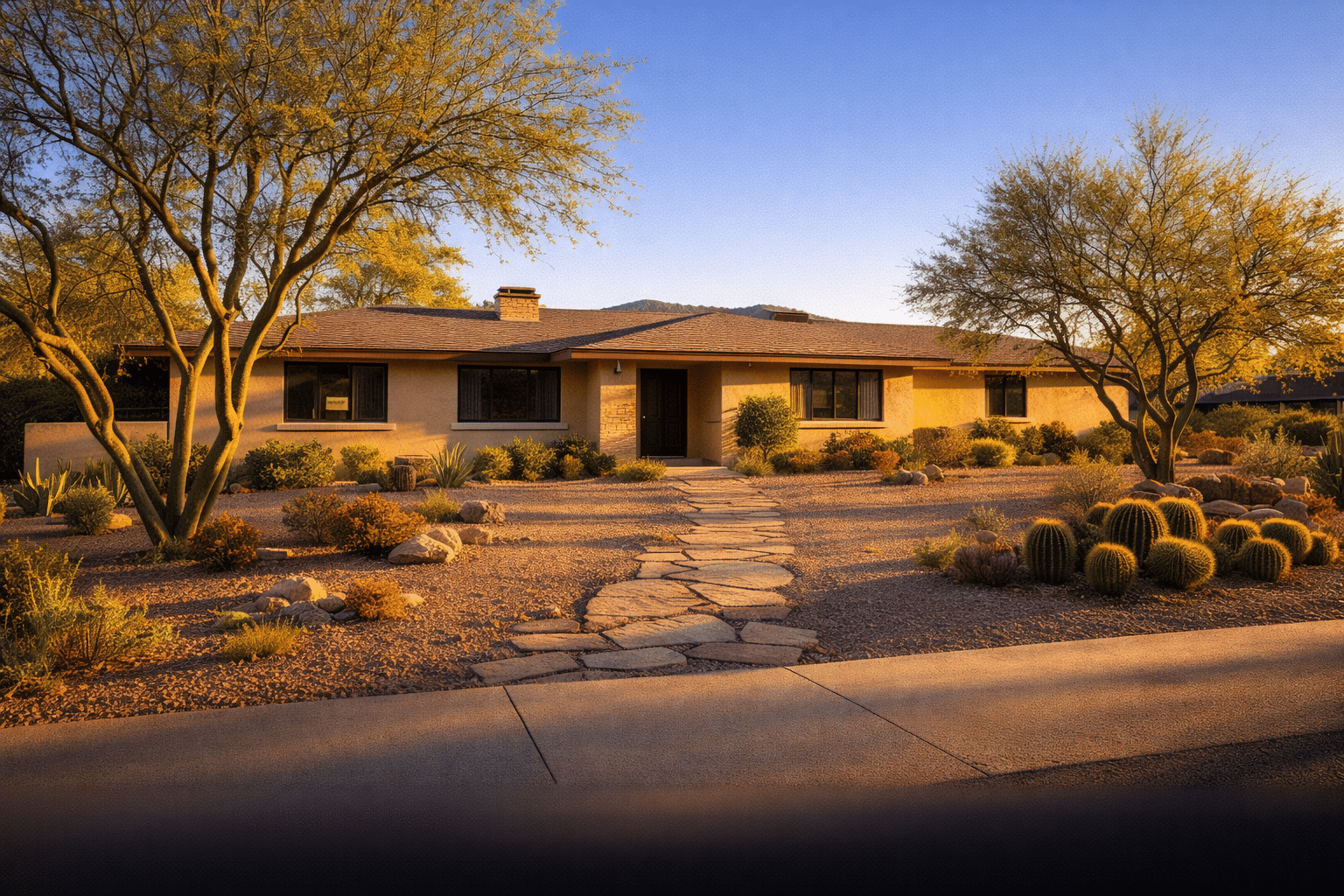
Financing a home in Phoenix AZ covers a wider range of loan products than most buyers initially expect — because Phoenix’s price spectrum, from sub-$300,000 condos in Midtown to multi-million-dollar estates in Biltmore and Arcadia, means the right loan structure depends heavily on which corridor and price tier the buyer is targeting.
For the broadest share of Phoenix buyers — those purchasing in the $350,000 to $700,000 range — conventional loans backed by Fannie Mae or Freddie Mac are the most common product, requiring 3 to 5 percent down with strong credit and offering flexibility on property type and HOA structure. An FHA loan lowers the entry point further, requiring as little as 3.5 percent down, and is broadly accepted across Phoenix’s resale inventory in established neighborhoods from Ahwatukee to North Phoenix. Eligible veterans and active-duty service members should evaluate a VA loan before any other product — the zero-down structure and competitive rates make it the strongest tool available to those who qualify, and Phoenix’s military-connected buyer population makes VA transactions a routine part of the local market. USDA loan eligibility applies to limited parcels on the outer edges of the metro; confirm address eligibility directly with a licensed Arizona lender before assuming qualification.
Properties above the conforming loan limit — common in Biltmore Estates, Arcadia, and premium north Phoenix addresses — require a jumbo mortgage product with stricter reserve requirements and longer approval timelines than conforming loans. Buyers in these price tiers should secure jumbo pre-approval before beginning any active property search.
Arizona’s down payment assistance programs through Home Plus AZ provide grants layered on top of FHA or conventional loans for qualifying buyers — no repayment required — and can be combined with seller concessions to further reduce cash at closing.
Phoenix new construction financing introduces a specific dynamic. Builders including Shea Homes, Fulton Homes, David Weekley Homes, and K. Hovnanian operate affiliated lending arms and commonly offer a builder rate buydown as an incentive tied to using their preferred lender. These offers are real but require comparison against outside lender rates. Accepting a builder’s financing without shopping the market first is the most common and most costly mistake Phoenix new construction buyers make. The buyers guide at West USA Realty covers loan type comparisons, new construction financing considerations, and what to expect when buying a home in Phoenix Arizona at every price point.

Phoenix is served by a network of public school districts with strong academic track records. Paradise Valley Unified covers northeast Phoenix and portions of north Scottsdale with 42 schools and serves more than 32,000 students. Deer Valley Unified operates 42 schools serving northwest Phoenix, while Washington Elementary manages 33 schools in the northwest corridor. Charter school options are widely available across the city, and private institutions like Brophy College Preparatory and Xavier College Preparatory offer highly competitive college-preparatory programs. Several public districts also maintain dual-language immersion programs, International Baccalaureate tracks, and dedicated STEM academies for students seeking specialized academic pathways.

Phoenix residents have access to an exceptional range of community amenities across the metro. South Mountain Park and Preserve provides more than 58 miles of maintained trails for hiking, biking, and equestrian use. The Desert Botanical Garden in Papago Park features one of the world’s finest collections of arid-climate plants. Municipal golf courses, community recreation centers, public libraries, and splash pads are distributed throughout the city’s neighborhoods. Master-planned communities across the northwest and southeast valley typically include resort-style pools, fitness centers, and social programming within their HOA amenity packages. The Phoenix Zoo and Musical Instrument Museum add cultural and family-focused destinations within easy reach for most residents.

Phoenix residents are well-positioned for access to regional retail, independent dining, and entertainment venues. Biltmore Fashion Park serves the central corridor with luxury retail and destination dining. Desert Ridge Marketplace anchors the north Phoenix retail hub. Neighborhood dining districts in Arcadia, the Camelback Corridor, and the Roosevelt Row Arts District downtown offer locally driven alternatives to national chains. The Musical Instrument Museum, Heard Museum, Phoenix Art Museum, and Arizona Science Center provide cultural depth. Major professional sports — including the Arizona Diamondbacks, Phoenix Suns, and Arizona Coyotes — and the Cactus League spring training circuit add a year-round entertainment dimension to life in the valley.

Phoenix’s freeway network provides broad coverage of the metro, with Interstate 10, Interstate 17, Loop 101, Loop 202, and US-60 forming the primary arterial framework. Valley Metro’s light rail system connects Downtown Phoenix, Midtown, Tempe Town Lake, and Mesa with regular service and expanding line coverage. Phoenix Sky Harbor International Airport, located approximately three miles from downtown and accessible directly from the light rail system, offers extensive domestic and international service. Commute times vary considerably by neighborhood and destination but most established residential areas maintain reasonable access to major employment centers in the central and east valley.

Phoenix maintains a comprehensive public safety infrastructure across its more than 500 square miles. The Phoenix Police Department and Phoenix Fire Department operate from distributed stations throughout the city, with response resources scaled to population density across neighborhoods. Many master-planned communities and established neighborhoods include active homeowners’ associations that coordinate with local law enforcement on neighborhood watch programs, security lighting, and community communication. Gated subdivisions are common across luxury and mid-range price tiers, providing an additional layer of access control for residents who prioritize that feature. As with any large American city, safety profiles vary by area, and buyers are encouraged to review publicly available data when evaluating specific communities.

Phoenix supports one of the most comprehensive healthcare ecosystems in the American Southwest. The Mayo Clinic in northeast Phoenix operates a nationally ranked specialty hospital and outpatient campus. Banner Health manages multiple full-service hospitals throughout the metro, including Banner University Medical Center and Banner Desert Medical Center in Mesa. Valleywise Health serves as Maricopa County’s primary safety-net health system. HonorHealth operates six hospitals across the valley with facilities in Scottsdale, Deer Valley, and John C. Lincoln. Dignity Health and Dignity Health Medical Group round out a broad network of primary care, urgent care, and specialty services distributed across Phoenix neighborhoods and accessible to residents throughout the metro.

Phoenix’s Sonoran Desert setting creates a year-round outdoor lifestyle that is one of the city’s defining advantages. South Mountain Park, Camelback Mountain, Papago Park, and the Phoenix Mountains Preserve all sit within or immediately adjacent to city limits, giving residents trail access without leaving the urban core. The McDowell Sonoran Preserve in neighboring Scottsdale adds more than 30,000 acres of protected desert with extensive trail networks. Tempe Town Lake provides waterfront access for kayaking, paddleboarding, and lakeside walking within the East Valley. Cycling culture is strong throughout Phoenix, with dedicated paths along the Grand Canal and Arizona Canal corridors offering flat, scenic routes through residential neighborhoods. Hot air balloon flights, guided desert tours, and rock climbing in the Superstition Mountains extend the outdoor lifestyle well beyond city trails.

The Phoenix real estate market operates within the broader Maricopa County economy, which continues to benefit from population growth, business relocation activity, and year-round desirability as a housing destination. Market conditions shift with interest rates and inventory levels, so working with a knowledgeable local agent is the most reliable way to understand current pricing, days on market, and negotiating dynamics in the specific neighborhoods and price tiers you are targeting.
Arizona real estate transactions are governed by state-specific contract forms, disclosure requirements, and licensing regulations. A licensed Phoenix realtor who is deeply familiar with the local market, local process, and Maricopa County-specific inventory can help you move efficiently from search to close — and anticipate issues before they become problems. Local knowledge of neighborhood-level value drivers, HOA structures, and builder reputation is difficult to replicate with national tools alone.
Yes. West USA Realty serves buyers and sellers across the full Phoenix metropolitan area, including Scottsdale, Paradise Valley, Chandler, Gilbert, Mesa, Tempe, Peoria, Glendale, and communities throughout Maricopa County. Carl Chapman’s brokerage experience covers luxury properties in Paradise Valley and Scottsdale’s guard-gated enclaves as well as attainably priced starter homes across the broader valley.
West USA Realty offers a comprehensive suite of services, including buyer representation (buying agent), listing and marketing services (selling agent), investment property consultation, relocation assistance, and home valuation analysis. Whether you are purchasing your first home or your fifth investment property, our team provides data-driven guidance through every stage of the transaction.
The East Valley encompasses Mesa, Chandler, Tempe, Gilbert, and Queen Creek — each with distinct neighborhood profiles, price ranges, and school district options. Carl Chapman can provide tailored property searches through the Arizona Regional MLS filtered by city, zip code, school district, HOA structure, and price range. Contact our office directly for a customized search or use the property search tool on westusa.net to start browsing active listings.
A home valuation is a comparative analysis of your property’s likely market value based on recent sales of similar homes in your immediate area. Unlike an automated online estimate, a professional valuation prepared by a licensed real estate agent considers current market conditions, property condition, recent sales price trends, and neighborhood-specific factors. Knowing your home’s accurate current value is the essential first step before listing, refinancing, or making estate or investment decisions.
Yes. Condominium and townhome listings are available throughout Phoenix across a range of price points. Midtown and Downtown Phoenix support the densest concentration of high-rise and mid-rise condominium inventory. Arcadia, Biltmore, and the Camelback Corridor offer boutique condo projects in walkable, amenity-rich settings. Suburban townhome communities are distributed across the northwest and southeast valley. Carl Chapman can filter active MLS listings by property type, location, price range, and HOA parameters to identify condominium options that match your priorities.
Selling a home in Phoenix AZ in the current market rewards sellers who price accurately and prepare their property for presentation before listing. The median sold price for Phoenix single-family homes sits between $461,000 and $481,500 depending on the source and timeframe, with homes averaging 62 to 67 days on market and a sale-to-list ratio near 96.65 percent. Nearly two-thirds of Phoenix listings have carried at least one price reduction before going under contract — a clear signal that overpricing is the most common and most costly seller mistake in the current market. Phoenix’s size means city-wide data is directional only; the correct list price for a property in Arcadia is determined by Arcadia comparables, and a home in Desert Ridge competes against new construction at price-per-square-foot levels that require a current ARMLS pull to price accurately. Seller concessions — rate buydowns and closing cost contributions — are effective tools because they address the buyer’s monthly payment concern more directly than a price reduction. The sellers guide at West USA Realty covers comparative market analysis, listing preparation, and negotiation strategy for the current Phoenix real estate market.
Phoenix AZ has consistently ranked among the most closely watched real estate investment markets in the American West, supported by structural demand drivers that differentiate it from many comparably priced metros. Population growth remains sustained, with the Phoenix metropolitan area continuing to attract residents from higher-cost West Coast and Midwest cities. The employment base has diversified significantly — anchored by semiconductor manufacturing from TSMC and Intel, logistics operations from Amazon, healthcare expansion through Banner Health and Mayo Clinic, and a growing technology sector across the metro. These employer anchors support both homeownership demand and rental demand — the two primary investment return drivers in a residential market. Single-family rental properties in established Phoenix neighborhoods with strong school district access have demonstrated stable occupancy through multiple market cycles. Investors should analyze at the neighborhood level rather than the city level, since Phoenix’s 500 square miles encompasses submarkets with very different appreciation profiles, days on market, and rental yield potential. Current buyer-favorable conditions create an entry environment that long-term investors tend to find more attractive than peak-market conditions. The new construction guide at West USA Realty covers builder inventory and investment considerations for new construction buyers across the Phoenix metro.
First-time homebuyers purchasing homes for sale in Phoenix Arizona have access to several loan programs that reduce the upfront cash required to close. FHA loans require as little as 3.5 percent down with qualifying credit and are widely accepted across Phoenix’s resale inventory. VA loans are available to eligible veterans and active-duty service members at zero down payment — one of the strongest financing tools available to those who qualify. Conventional loans backed by Fannie Mae and Freddie Mac allow as little as 3 percent down for qualifying first-time buyers. Arizona’s Home Plus AZ program provides down payment assistance grants layered on top of FHA or conventional loans for buyers who meet income and purchase price limits — these grants do not require repayment and can significantly reduce cash needed at closing. Seller concessions negotiated into the purchase contract can further offset buyer closing costs. Buyers should secure mortgage pre-approval from a licensed Arizona lender before beginning any active property search, as sellers in Phoenix’s most active price tiers will not entertain offers without demonstrated financing readiness. The buyers guide at West USA Realty covers loan type comparisons and what to expect when buying a home in Phoenix AZ for the first time.
Buying new construction in Phoenix differs from purchasing a resale home in three primary ways: builder representation, financing timeline, and contract structure. Builder sales representatives work for the builder — not for the buyer. Having your own licensed Phoenix buyer’s agent during the new construction process provides contract review, negotiation support on upgrades and incentives, and protection that self-represented buyers do not receive. Builder financing arms frequently offer rate buydowns or closing cost credits tied to using their preferred lender — these offers are real but should always be compared against outside lender rates before accepting. New construction timelines in Phoenix typically run 90 to 180 days from contract to close depending on build stage, affecting rate lock strategy and housing transition planning in ways a standard resale close does not. Builder contracts in Phoenix differ significantly from the standard Arizona Association of Realtors purchase contract — inspection, cancellation, and warranty terms require careful review before signing. Buyers should register with a buyer’s agent on their first visit to any builder community to protect their representation rights. The new construction guide at West USA Realty covers builder contract terms, financing considerations, and what to expect at each stage of the Phoenix new construction purchase process.
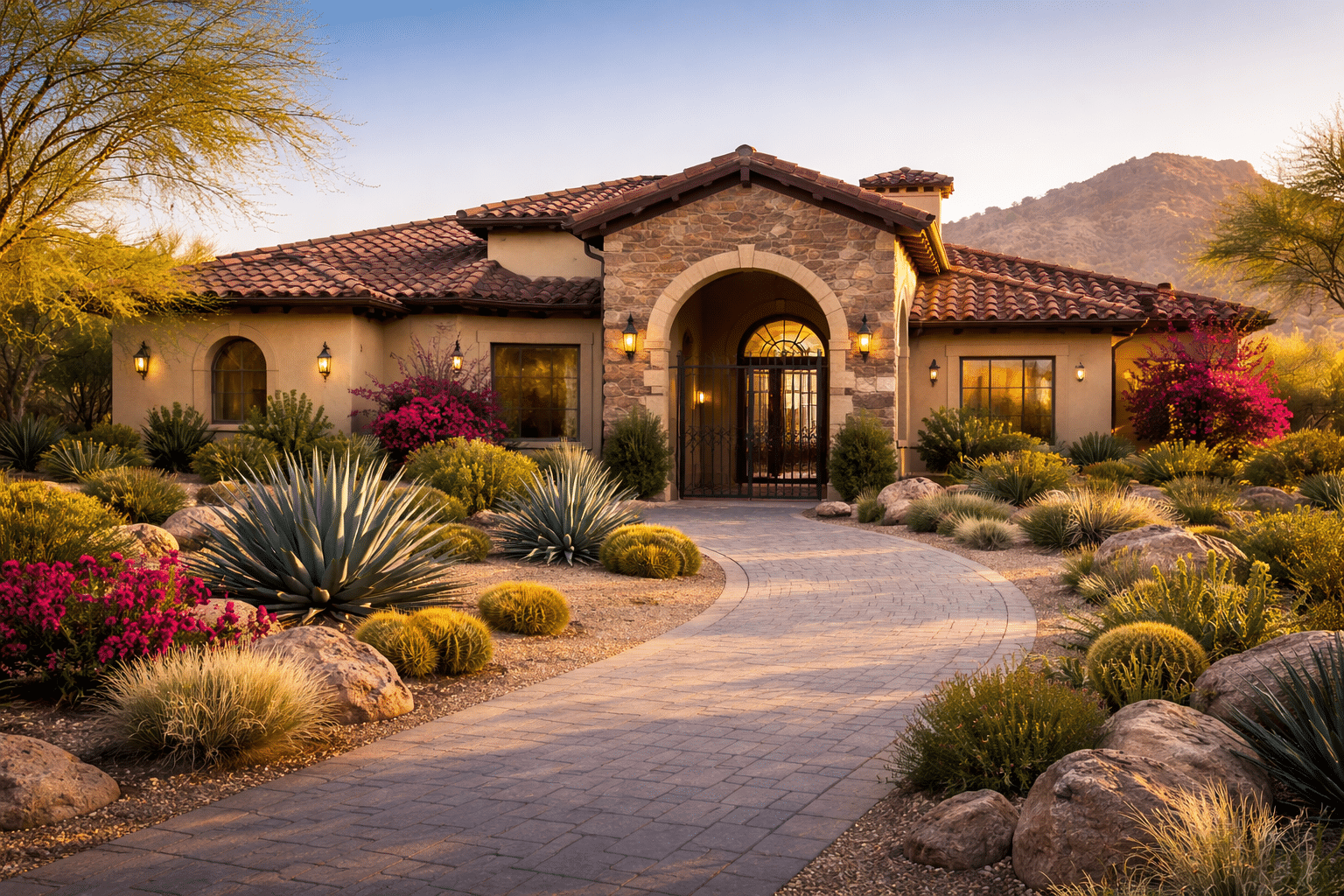
Phoenix is more than a housing market — it is a lifestyle destination that continues to reward the people who choose to put down roots here. Whether you are drawn to the luxury custom homes of the Biltmore Estates corridor, the family-focused communities served by Paradise Valley Unified School District, the resort-style living found near the city’s championship golf courses, or the creative and entrepreneurial energy of the revitalized downtown, Phoenix has a neighborhood and a property type that fits your vision.
The combination of a year-round outdoor lifestyle, a growing and diversified economy, top-ranked healthcare institutions, respected school districts, and a cultural scene with genuine depth gives Phoenix a competitive profile that few American cities can match at any price point. With established builders like Shea Homes, Fulton Homes, and David Weekley Homes continuing to open communities across the valley — alongside resale inventory spanning every neighborhood type — the opportunity to find the right home in the right location is real and present.
Ready to start your Phoenix real estate search? Contact Carl Chapman, Associate Broker with West USA Realty, at 602-942-4200 or email chapman@westusa.com. With deep knowledge of the Phoenix and greater Maricopa County market, Carl is prepared to help you evaluate neighborhoods, identify properties that meet your criteria, and guide you through every step of the transaction — whether you are buying, selling, or investing.
The Phoenix housing market remains one of the most closely watched residential markets in the United States, drawing sustained interest from buyers relocating from higher-cost metros, investors seeking long-term appreciation in a growth-driven economy, and Arizona-based families trading up or rightsizing within the valley. The median sale price for single-family homes in Phoenix currently sits near $459,000, reflecting a modest year-over-year gain that points to durable demand even as elevated mortgage rates have moderated the pace of transactions across the broader market. Homes across the metro are averaging approximately 66 days on the market — slightly longer than the national average — giving prepared buyers more room to evaluate options without the intensity that characterized the market during peak pandemic years.
Maricopa County‘s residential inventory spans an exceptional range, from entry-level condominiums in Midtown and Downtown Phoenix priced well under $300,000 to custom estates along the Camelback and Biltmore corridors that extend into the multi-million-dollar tier. Buyers comparing Phoenix AZ real estate to nearby cities will find meaningful distinctions at every price point: Scottsdale luxury homes carry a premium tied to guard-gated communities and resort-caliber amenities, while Mesa real estate in the East Valley consistently offers larger lot sizes at lower price-per-square-foot figures. Chandler homes for sale and Tempe properties round out a Southeast Valley corridor that appeals strongly to technology-sector professionals and growing families seeking proximity to major employment centers.
We use cookies to improve your experience on our site. By using our site, you consent to cookies.
Manage your cookie preferences below:
Essential cookies enable basic functions and are necessary for the proper function of the website.
You can find more information about our Cookie Policy and Privacy Policy.