
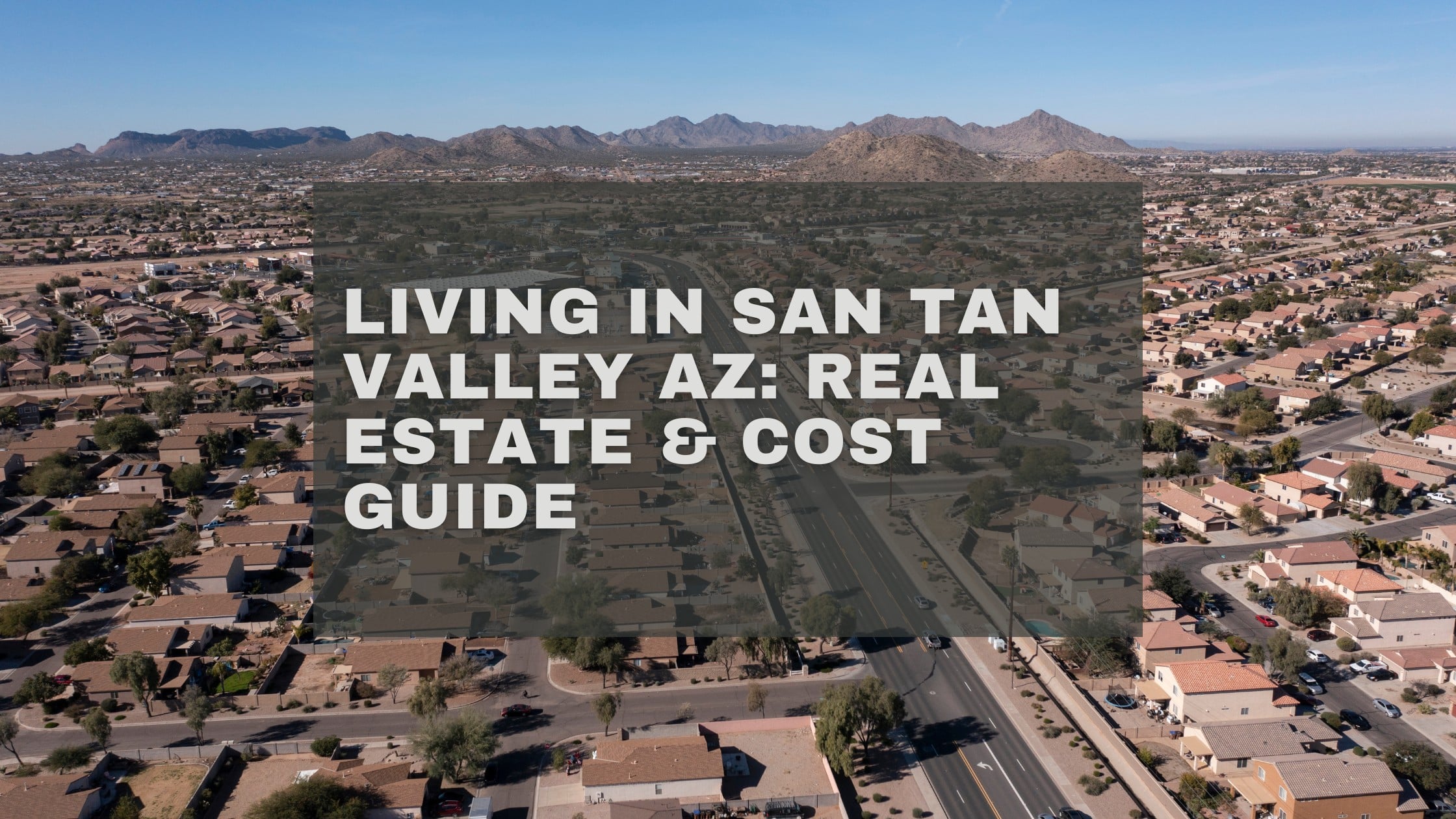
If you’re considering living in San Tan Valley AZ, you’re not alone. This fast-growing area in the Southeast Valley attracts buyers who want newer homes, more space for the money (compared to some closer-in cities), and easy access to outdoor recreation near the San Tan Mountains. And for many shoppers, San Tan Valley real estate feels like a practical path to homeownership—especially if you’re priced out of some neighboring areas.
This guide covers what buyers really want to know: current market trends, cost-of-living considerations that affect monthly budgets, the lifestyle reality (commutes, amenities, and daily rhythm), and smart buyer tips that help you purchase confidently.
San Tan Valley real estate market snapshot
San Tan Valley is big enough that the “market” isn’t one-size-fits-all, but citywide indicators help set expectations.
-
Median sale price: Redfin reports that in November 2025, San Tan Valley homes sold for a median price around $420,000 (down year-over-year), with homes averaging about 67 days on market.
-
Home value estimate (another lens): Zillow reports an average home value around $392,142, down 3.7% over the past year (methodology differs from median sale price, but it’s helpful for direction).
What this means for buyers: In many price ranges, you may have time to compare homes, especially if a listing is overpriced or needs updates. But well-presented homes in popular pockets can still move quickly—so your best strategy is to shop by micro-market and be ready when the “right fit” appears.
To see current inventory and filter by the features buyers prioritize here (newer build, single-story, RV gate, pool, HOA/no HOA), start by browsing Arizona homes for sale and narrowing by San Tan Valley.
Cost of living in San Tan Valley: the budget categories that matter most
Cost of living isn’t just “prices”—it’s the combination of housing, transportation, and utility realities that shape your monthly cash flow. One cost-of-living breakdown notes that local expenses vary across categories like housing, food, and transportation, which is useful when you’re relocating and trying to build a realistic budget.
Housing (the biggest lever)
In San Tan Valley, housing tends to be the main reason people move here in the first place: many buyers can find newer construction patterns, larger floorplans, and more driveway/garage space relative to other nearby markets.
A smart approach is to:
-
Pick a monthly payment comfort zone first
-
Decide which features you won’t compromise on (single-story, office, 3-car garage, etc.)
-
Then compare multiple neighborhoods within San Tan Valley before choosing a “favorite”
Rent trends (helpful for rent-vs-buy)
If you’re considering renting first—especially if you’re relocating—rent trends can help anchor your thinking:
-
Zumper reports a median rent around $1,895 (Jan 2026) for San Tan Valley across all bedroom counts and property types.
-
Zillow reports an average rent around $1,950 for the area.
These are “big picture” numbers. Your real rent (or rental income, if you’re investing) depends heavily on the specific home type and neighborhood pocket.
Utilities (plan for summer comfort)
Like the rest of the Phoenix metro, A/C is a major part of life. When you tour homes, ask questions that can affect both comfort and monthly costs:
-
HVAC age and maintenance history
-
Window quality and shade exposure (west-facing afternoon sun is intense)
-
Insulation and roof condition
-
Pool equipment condition (if applicable)
Transportation (the hidden cost)
San Tan Valley is often a value win on the home itself—but drive time can be a trade-off depending on where you work. If you commute to job centers in Tempe, Scottsdale, or central Phoenix, build your “drive-time budget” into the decision the same way you’d budget a mortgage payment.
Lifestyle overview: why buyers like San Tan Valley
San Tan Valley tends to attract buyers who want a more residential pace and newer neighborhoods—without leaving the Valley entirely.
1) Newer-home living and modern layouts
Many communities in and around San Tan Valley feature floorplans designed for how people live now—open kitchens, larger primary suites, dedicated office space, and easy indoor/outdoor flow. If you’re moving from out of state and want “move-in ready” without a major remodel, this is a big draw.
2) Outdoor recreation close to home
Proximity to the San Tan Mountains is a major lifestyle perk. If your ideal weekend includes hikes, sunrise walks, or mountain views, this area can feel like a daily upgrade.
3) “Everyday life” convenience is improving
As the area grows, services and amenities tend to expand too—more dining, shopping, and local options. That’s part of why buyers who want space and value keep putting San Tan Valley on the shortlist.
4) Local governance changes to be aware of
San Tan Valley has also been in the news for efforts related to incorporation, which could influence local services and community identity over time. Axios reported that voters were heavily supporting incorporation, with the county continuing to manage services during a transition period.
(If you’re buying, this is a “watch item,” not a deal-breaker—just something worth discussing with a local expert.)
Where San Tan Valley fits in the Southeast Valley
Many buyers compare San Tan Valley with nearby cities to find the best match for commute and lifestyle:
-
If you want a nearby option with a more established “town” feel and lots of newer master-planned choices, explore Queen Creek real estate.
-
If you want a more polished, amenity-rich East Valley environment (often with different price dynamics), compare with Gilbert real estate.
-
If you’re still narrowing the Valley overall, this hub of Arizona cities and community guides is a helpful way to compare multiple areas without bouncing between random sources.
What buyers should know before purchasing in San Tan Valley
1) Shop by “micro-market,” not headlines
Citywide stats are useful, but they don’t tell you:
-
Which pockets have higher HOA fees (and what you get for them)
-
Where new construction is expanding
-
Which streets feel quieter vs. busier
-
How school preferences and commute routes change by neighborhood
The best strategy is to choose 2–3 target pockets and compare similar homes within those pockets so you learn what “good value” looks like fast.
2) HOA rules can shape your daily life
Many communities in this part of the Valley have HOAs. That can be a plus (appearance consistency and amenities), but you should confirm:
-
Parking rules (trailers, work vehicles, RV gates)
-
Rental restrictions (important even if you’re not investing today)
-
Exterior change guidelines (landscaping, sheds, paint colors)
-
Fees and what they cover
3) Desert-home diligence matters (especially systems)
In Arizona, long-term comfort often comes down to systems and maintenance. During inspections and walk-throughs, pay extra attention to:
-
HVAC performance and age
-
Roof condition (and underlayment details, if applicable)
-
Water heater and plumbing condition
-
Irrigation/landscape setup
-
Pool equipment age (if you’re buying a pool home)
4) Be realistic about commute and “daily routes”
Before you commit, map:
-
Work commute time during rush hours
-
School/daycare routes (if applicable)
-
Weekly errands (grocery, gym, medical)
-
Weekend patterns (restaurants, friends/family, trails)
If you love the home but hate the drive, that friction shows up every week.
Buyer tips that make the process smoother
Get your buying process clear early
If you haven’t bought in a while (or you’re new to Arizona), it helps to understand the typical timeline: financing, inspections, appraisal, and contingencies. The Arizona home buying resource hub is a strong starting point for getting oriented.
Understand representation and paperwork before you’re in the middle of it
Two quick reads that prevent stress later:
-
Understanding buyer broker agreements (so you know what you’re signing and why it matters)
-
Wire fraud advisory for buyers (so you protect your funds during earnest money and closing)
Know when “new build” is a win (and when resale is smarter)
San Tan Valley often offers new construction options, which can be great—but resale can sometimes offer:
-
A finished backyard (saving you time and money)
-
Mature landscaping and shade
-
More established neighborhood feel
Neither is “better” universally. The right choice depends on your timeline, budget, and whether you want to customize or move in immediately.
Image suggestions for this post
-
San Tan Mountains sunrise view (Alt: “San Tan Mountains near San Tan Valley Arizona”)
-
Newer single-story home exterior (Alt: “Newer construction home in San Tan Valley AZ”)
-
Covered patio and backyard setup (Alt: “Covered patio outdoor living in San Tan Valley”)
-
Neighborhood park and walking paths (Alt: “Community park near homes in San Tan Valley Arizona”)
FAQs about living in San Tan Valley, AZ
Is San Tan Valley a good place to buy a home right now?
It can be, especially if you want newer-home options and a more residential pace. Market indicators suggest homes are taking time to sell in many cases, which can give buyers room to compare and negotiate depending on the listing.
What are home prices like in San Tan Valley?
Recent data shows a median sale price around $420,000 (Nov 2025), though prices vary by neighborhood, home size, and condition.
How much is rent in San Tan Valley?
Recent rent tracking shows a median around $1,895 (Jan 2026), with other sources estimating average rent around $1,950.
Is San Tan Valley closer to Queen Creek or Gilbert?
San Tan Valley is often compared most directly with nearby Southeast Valley communities like Queen Creek and Gilbert. Which is “best” depends on your commute and the lifestyle amenities you prioritize.
What should I prioritize when touring homes in San Tan Valley?
Focus on (1) commute reality, (2) HOA rules, and (3) home systems like HVAC and roof condition—those are the factors that most affect long-term comfort and cost.
Conclusion: is San Tan Valley real estate right for you?
If your priorities are space, newer-home living, and a quieter residential rhythm—plus desert views and outdoor access—San Tan Valley real estate can be a strong fit. The key is to shop by micro-market, stay realistic about commute, and do smart diligence on HOAs and home systems.
When you’re ready to explore real options, start with San Tan Valley homes and local info and then filter Arizona homes for sale by the features that matter most to your daily life. And if you want a local partner to help you narrow neighborhoods, evaluate true value, and move forward with confidence, connect with West USA Realty for practical guidance tailored to the Southeast Valley.