When your offer is accepted, it’s normal to feel a mix of excitement and “Wait… what happens now?” In escrow in Arizona, the real work starts behind the scenes: timelines kick in, documents start flowing, money moves (safely), and your due diligence window opens.
This guide breaks down the Arizona escrow process in plain English—so whether you’re buying in the Phoenix real estate market, looking at Scottsdale homes for sale, or exploring options across the Valley, you’ll know what to expect and how to avoid common surprises.
What “Escrow” Means in Arizona (And Why It Exists)
In Arizona, escrow is a neutral process designed to protect both buyer and seller while the contract terms are completed. A third party (the escrow company/title company) holds key items—like earnest money and closing documents—and helps coordinate the steps required to close.
Think of escrow as the “project manager” of the transaction timeline. Your Realtor, lender, title team, inspectors, and (if applicable) HOA all have tasks to complete—and escrow keeps the closing on track.
If you’re buying with guidance from a local pro at West USA Realty, your agent will also help you stay ahead of the deadlines and paperwork that matter most.
Step 1: You Open Escrow and Deliver Earnest Money
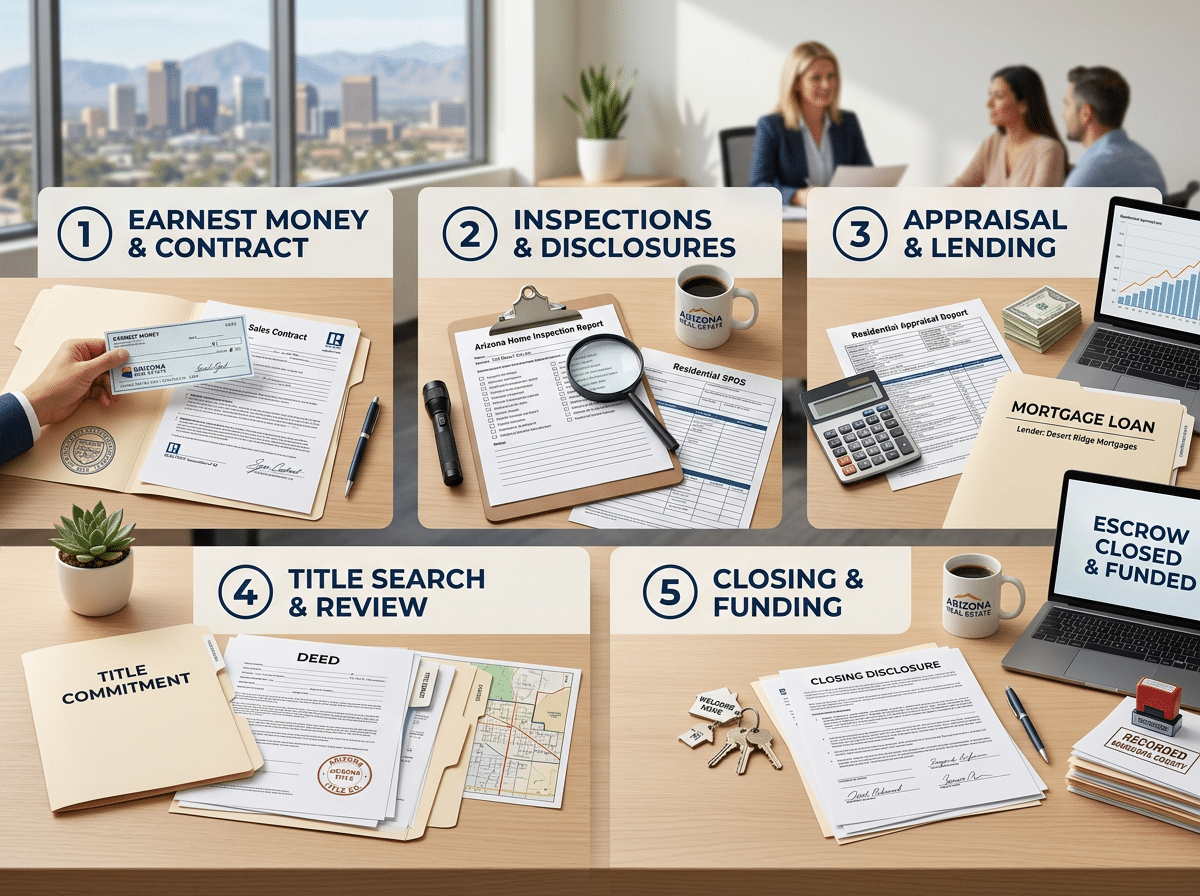
Once the offer is accepted and the contract is fully signed, escrow is opened. One of the first big items is your earnest money deposit—the “good faith” deposit showing you’re serious.
What to expect
- Escrow provides instructions for where/how to deliver earnest money
- Deadlines are strict—missing them can create contract issues
- Your agent will confirm escrow received and posted the funds
Pro tip: Treat wiring instructions like gold. Wire fraud is a real risk in real estate transactions—always verify instructions using a known phone number before sending funds. The Arizona wire fraud advisory is worth reading early, not later.
Step 2: Your Contract Timelines Start (This Is Where People Slip)
In Arizona, the purchase contract uses a “critical dates” approach. That means you’ll have a series of deadlines—for inspections, disclosures, appraisal, loan approval, and more.
You don’t need to memorize every date, but you do need to respect them. Many buyers get into trouble by assuming “we’ll handle it later” and then realizing the due diligence window is closing fast.
To get a feel for how dates are tracked, review the Arizona critical date list. It’s one of the simplest ways to understand what’s coming and when.
Step 3: Title Work Begins (Ownership, Liens, and “Can This Home Be Sold?”)
While you’re scheduling inspections and working with your lender, the title company begins researching the property’s ownership history.
Title tasks during escrow typically include
- Confirming the seller has legal right to sell
- Checking for liens, judgments, or unpaid taxes
- Reviewing easements (like shared driveways or utility access)
- Preparing the title commitment and required curative steps (if needed)
If issues pop up, they don’t always kill the deal—but they can create delays. This is one reason escrow timelines matter: title problems take time to resolve.
Step 4: You Receive Disclosures (And You Should Actually Read Them)
Arizona buyers receive disclosures designed to share what the seller knows about the home and what buyers should investigate.
Two common documents you’ll see:
Seller’s Property Disclosure Statement (SPDS)
This is where the seller discloses what they know about the property’s condition and history. It’s not a warranty—but it is important. If you want a deeper explanation of what’s inside and why it matters, see the Arizona SPDS overview.
Other disclosures (common examples)
- HOA documents (if applicable)
- Seller-provided reports or repair invoices
- Insurance claim history (sometimes)
- Lead-based paint disclosure for older homes (when required)
Local note: In master-planned communities across places like Gilbert, Queen Creek, Surprise, and Goodyear, HOA documents can be thick. It’s normal—but don’t ignore them. Rules about rentals, parking, exterior changes, and even holiday lights can matter more than you think.
Step 5: Inspections Happen (Your Due Diligence Window)
Most Arizona purchase contracts include an inspection period. This is your time to learn about the property and decide what you’re comfortable with.
Common inspections buyers order
- General home inspection
- Termite/WDO inspection
- Pool inspection (very common in Arizona)
- Sewer scope (varies by area/age of home)
- Roof inspection (especially for older roofs or flat roofs)
After inspections, buyers typically either:
- Accept the home as-is
- Request repairs or credits
- Cancel (if they’re within their inspection rights)
The document that often governs this negotiation is the BINSR. If you want a buyer-friendly breakdown of how the inspection notice and response works, check out the Arizona BINSR guide.
Important mindset: The goal isn’t to find a “perfect” house—almost none exist. The goal is to understand the condition, estimate future costs, and negotiate fairly when something material shows up.
Step 6: Your Loan Moves Into Underwriting (And the Appraisal Gets Ordered)
If you’re financing the purchase, escrow and your lender run in parallel.
What your lender is doing during escrow
- Verifying your income, assets, and credit
- Reviewing the purchase contract
- Ordering the appraisal (in most cases)
- Confirming loan program requirements (FHA/VA/conventional, etc.)
What the appraisal does (and doesn’t) do
An appraisal is primarily for the lender. It helps confirm the home’s value supports the loan amount. It is not a full condition inspection (that’s what your home inspector is for).
If the appraisal comes in low, there are several possible outcomes:
- Buyer brings additional cash
- Seller reduces price
- Parties negotiate a middle ground
- Buyer cancels (depending on contract terms)
This is where having a strong Realtor matters—someone who can share local comps and negotiate smartly based on the property and the market.
Step 7: Repairs, Re-Inspections, and Final Negotiations
If you negotiate repairs, the transaction often enters a “coordination” phase:
- Seller schedules contractors
- Receipts and invoices may be shared
- Buyer may re-inspect to confirm completion
- Escrow/lender may require certain documentation
One practical Arizona tip: If the home has a pool, it’s worth confirming equipment condition and getting clarity on what conveys (cleaning systems, removable safety fences, automation panels, etc.).
Step 8: Insurance, Utilities, and Pre-Closing Checklist
As closing gets closer, there are a few tasks buyers sometimes forget until the last minute.
Buyer to-dos before closing
- Shop and bind homeowners insurance (send proof to lender)
- Confirm closing funds process with escrow (again: verify instructions)
- Schedule utilities to transfer or start service
- Review your Closing Disclosure carefully (your lender provides this)
If you’re relocating from out of state, add a little extra buffer—coordinating signatures, final walk-through timing, and funding logistics can be trickier when you’re not local.
Step 9: Final Walk-Through (Your “Last Look” Before Closing)
The final walk-through is typically done shortly before closing. This is your chance to confirm:
- The home is in the expected condition
- Repairs were completed as agreed
- Items that should convey are still there
- No new damage has occurred since inspections
Walk-throughs don’t replace inspections—they confirm nothing changed.
Step 10: Signing, Funding, and Recording (When It Becomes Official)
Closing isn’t one moment—it’s a sequence.
In many Arizona transactions, it goes like this
- You sign closing documents (sometimes remotely or with a mobile notary)
- Your loan funds (for financed deals)
- The deed records with the county (this is the big moment)
- Keys are released based on contract terms and recording confirmation
Your Realtor and escrow team will tell you when the home is officially recorded—and when you can celebrate.
A Simple Arizona Escrow Timeline (Typical, Not Guaranteed)
Every transaction is different, but many escrows follow this general rhythm:
- Days 1–3: Earnest money delivered, escrow opened, timelines begin
- Days 3–10: Disclosures delivered, inspections scheduled/completed
- Days 10–20: Repair negotiations, appraisal ordered/completed
- Days 20–30+: Underwriting clears conditions, closing prep begins
- Final days: Walk-through, signing, funding, recording
The big takeaway: escrow feels slow… until it suddenly feels fast.
Common “Escrow Surprises” Buyers Can Avoid
1) Waiting too long to schedule inspections
Good inspectors book up—especially during busy seasons.
2) Not reading HOA docs
Rules on rentals, parking, and exterior changes can affect your lifestyle and future resale.
3) Moving money without verifying instructions
Always confirm using a trusted number—not an email reply.
4) Assuming the appraisal is the same as an inspection
Different purpose, different scope.
5) Missing a deadline
Arizona contracts are deadline-driven. Your Realtor should help, but buyers should stay engaged too.
Escrow in Arizona Feels Smoother When You Start With the Right Home
The escrow process is easier when you buy a home that fits your budget, lifestyle, and risk tolerance from day one. If you’re still shopping, you can browse Arizona homes for sale across the Valley and compare neighborhoods by commute, amenities, and price point.
If you want to understand the contract side more deeply (in plain language), the West USA homebuyer resources cover common Arizona forms, disclosures, and key steps you’ll see during escrow.
FAQs About the Arizona Escrow Process
How long is escrow in Arizona?
Many Arizona escrows run around 30 days, but the exact timeline depends on financing, inspections, appraisal, title work, and negotiated contract terms.
Can I back out during escrow in Arizona?
Often yes—if you cancel within your contractual contingencies and timelines (like the inspection period). Your agent can explain your specific rights based on your contract dates.
When do I schedule inspections after offer acceptance?
As soon as possible. Inspection windows can be short, and inspector availability varies by season and area.
What happens if the appraisal is lower than the purchase price?
You’ll typically negotiate: price reduction, buyer cash to cover the gap, or a compromise. Some buyers can cancel if they have an appraisal or loan contingency.
When do I get the keys in Arizona?
Usually after the deed records (and funding is complete), unless the contract includes a post-possession agreement or other special terms.
Next Step: Make Escrow Simple With the Right Team
If you’re heading into escrow—or getting ready to make an offer—working with a local expert can make the process far less stressful. Connect with West USA Realty for guidance tailored to your timeline, your financing, and the neighborhood you’re targeting. And if you’re still shopping, start by narrowing your options through Arizona homes for sale so you can write a stronger offer with fewer surprises.