
Retiring in Arizona often comes with a big housing decision: Should you buy new construction or a resale home? Both can be great choices—but they serve different priorities. If you want low maintenance, modern layouts, and energy efficiency, new builds can be appealing. If you want mature landscaping, established neighborhoods, and potentially a better location, resale might win.
This guide breaks it down in plain English with Arizona-specific realities—heat, HOAs, single-story demand, and the lifestyle differences between master-planned communities and older neighborhoods. As you compare options, start by browsing Arizona homes for sale so you can see what’s available right now in your price range and preferred cities.
The first question retirees should ask: What are you optimizing for?
Before comparing new vs resale, decide which of these matters most:
- Low maintenance now (and fewer surprises later)
- Budget certainty (predictable monthly costs)
- Location convenience (medical, dining, family, airports)
- Community lifestyle (clubs, golf, social events, walkability)
- Future-proof design (single-story, wider hallways, step-free entry)
- Move-in speed (how quickly you need to relocate)
Once you know your top 2–3 priorities, the decision often becomes much clearer.
Why new construction can be a strong fit for retirees in Arizona
1) Modern, retirement-friendly layouts are easier to find
Many new builds are designed with what retirees frequently want:
- Single-story floorplans
- Open living areas (easier movement, fewer tight hallways)
- Primary suite separation (privacy for guests)
- Large showers and fewer interior steps (depending on the builder and model)
If your goal is “age-in-place” design, new construction can reduce the need for expensive retrofits later.
2) Energy efficiency matters more in Arizona than most states
Air conditioning is a major monthly cost in the summer. Newer homes may offer:
- Better insulation and sealing
- Newer HVAC systems
- Dual-pane windows and efficient layouts
That can translate into more comfortable indoor temps and potentially lower utility bills—especially important if you’re on a fixed retirement budget.
3) Warranties and fewer immediate repairs
While no home is maintenance-free, new construction typically comes with builder warranties. For many retirees, that “less surprise” feeling is a big quality-of-life benefit—especially if you’re moving from out of state and don’t want to start retirement with a list of repairs.
4) Master-planned and active adult communities are often built around lifestyle
Newer communities may offer:
- Fitness centers, pools, clubs, walking paths
- Pickleball courts and organized social calendars
- HOA-maintained common areas (sometimes exterior maintenance too, depending on community type)
If you want a built-in social network and planned amenities, new construction communities can be an easy on-ramp.
The downsides of new construction retirees should plan for
1) “Base price” is rarely the final price
In Arizona, many buyers are surprised by how fast upgrade costs add up:
- Lot premiums (corner lots, greenbelt views)
- Flooring, cabinets, countertops
- Backyard landscaping (often not included)
- Window coverings, appliances, lighting packages
If you choose new construction, budget for the true move-in-ready cost—not just the advertised number.
2) The neighborhood may not feel “finished” for a while
Construction traffic, noise, and incomplete landscaping can last months or years depending on the phase. For retirees wanting peace and quiet immediately, this can be a real drawback.
3) Location tradeoff: new builds are often farther out
Many new communities are located on the edges of the metro areas where land is available. That can mean longer drives to:
- Specialty healthcare
- Favorite restaurants
- Cultural events
- Family on the other side of town
If medical access and convenience are top priorities, resale closer to established corridors may be a better fit.
4) HOAs can be higher (and rules can be strict)
Many new communities have robust HOAs. That can be great for upkeep and amenities, but you’ll want to understand:
- Monthly dues and what they cover
- Rules about rentals, exterior changes, RV parking, and even paint colors
- Whether the community is age-restricted or all-ages
Why resale homes can be the better retirement move in Arizona
1) Established neighborhoods often deliver better convenience
Resale is where you’ll find:
- Mature trees and landscaping
- Closer-in locations
- Neighborhood character and variety
Retirees who want quick access to dining, healthcare, and cultural activities often lean toward established areas—especially in the Phoenix real estate market where you can choose between central neighborhoods, suburban pockets, and everything in between.
2) You can see exactly what you’re getting
With resale, the home is “real” today:
- You can inspect the roof, HVAC, windows, and drainage
- You can evaluate street noise and traffic patterns
- You can meet neighbors and gauge the feel of the block
That certainty can matter more than shiny finishes, especially if you’re moving from out of state and want fewer unknowns.
3) Potential value advantages (depending on upgrades and location)
Not always, but resale sometimes offers:
- More lot size for the price
- Better views or better location for similar money
- Included features (backyard done, window coverings, appliances)
If you compare a new build with upgrades vs a resale that already has the “extras,” resale can be a stronger value.
4) More options for “lock-and-leave” in prime areas
In places like Scottsdale’s real estate market, retirees often consider condos or townhomes for lock-and-leave living near dining, golf, and events. Many of those opportunities are resale, not brand-new builds.
The downsides of resale (and how retirees can reduce the risk)
1) Deferred maintenance is common
Arizona’s sun is tough on homes. On resale, pay special attention to:
- Roof condition (especially underlayment on tile roofs)
- HVAC age and service history
- Windows and seals
- Pool equipment (if applicable)
- Water heater and plumbing updates
A thorough inspection is non-negotiable.
2) Older layouts may be less retirement-friendly
Some resale homes have:
- Steps at entry or sunken living rooms
- Narrow hallways
- Small bathrooms or tight shower spaces
- Lots of interior doors and segmented rooms
This doesn’t mean “don’t buy”—it means budget for modifications or prioritize homes already updated for easier living.
3) Renovations can be disruptive (and expensive)
If you plan to remodel after purchase, consider:
- Your tolerance for living through noise and dust
- Contractor availability
- Timeline realism
- Whether the renovation actually improves comfort (not just looks)
Many retirees prefer a resale home that’s already been updated—even if it costs more upfront—because it reduces disruption.
A quick Arizona comparison: which option wins by category?
Upfront cost control
- New construction wins if you want predictable systems and fewer immediate repairs
- Resale wins if you can find a well-maintained home with key upgrades already done
Monthly maintenance and surprises
- New construction tends to win early on
- Resale can win if the home has recent roof/HVAC updates and you’ve verified condition
Location and convenience
- Resale often wins due to established neighborhoods and closer-in options
- New construction may be farther out, depending on the area
Lifestyle community
- New construction often wins in master-planned/amenity-heavy neighborhoods
- Resale can win in walkable cores and mature neighborhoods with character
The “right answer” depends on the kind of retiree you are
If you want low upkeep and modern design
New construction is often ideal if you prioritize:
- Single-story living
- Minimal immediate repairs
- Energy efficiency
- Community amenities and social events
This can be especially appealing in newer East Valley communities where you can still find fresh inventory and modern floorplans—though you should compare drive times for healthcare and daily errands.
If you want location, character, and instant livability
Resale is often best if you prioritize:
- Being closer to healthcare corridors and specialists
- Mature landscaping and established neighborhoods
- Finished backyards and “everything already installed”
- Neighborhood variety (not cookie-cutter)
City-by-city considerations retirees commonly run into
Phoenix: best variety for both new and resale
Phoenix offers the widest range: newer builds on the edges, and resale in established pockets closer to services. If you want to compare multiple lifestyles—urban convenience, suburban quiet, or planned communities—Phoenix gives you options within one metro. Start your comparison within the Phoenix real estate market.
Scottsdale: resale and lock-and-leave living often shine
Scottsdale is popular for retirees who want amenities, dining, golf, and events. Many buyers here prefer resale condos and townhomes that offer lock-and-leave convenience and strong location benefits. Explore neighborhoods through Scottsdale’s real estate market.
Gilbert: newer resale and planned neighborhoods are common
Gilbert often appeals to retirees who want a clean suburban rhythm, newer housing stock, and convenient shopping/dining. It can be a sweet spot for people who want “new-ish” without the construction phase reality. Check the Gilbert real estate market.
Queen Creek: newer construction is a major driver
Queen Creek tends to attract buyers who want newer homes, more space, and a calmer pace. It’s a strong contender if you’re okay being farther from some central services in exchange for newer communities and larger floorplans. See options in the Queen Creek real estate market.
Smart steps retirees can take before deciding
1) Tour both types back-to-back
See a new build and a resale in the same day. You’ll quickly learn what you value more: finishes and efficiency vs character and location.
2) Prioritize “future-proof” features
Regardless of new or resale, look for:
- Minimal steps (or ability to add a ramp)
- Wide doorways/hallways where possible
- Walk-in shower potential
- Good lighting and simple floorplan flow
3) Understand HOA rules upfront
Ask about:
- HOA fees and what they include
- Rental restrictions
- Guest parking rules
- Exterior modification rules (including small changes like railings or security doors)
4) Build a realistic “true monthly cost”
Include:
- HOA dues
- Utilities (summer cooling)
- Insurance
- Maintenance reserve (even new homes need upkeep)
5) Align your financing and timeline early
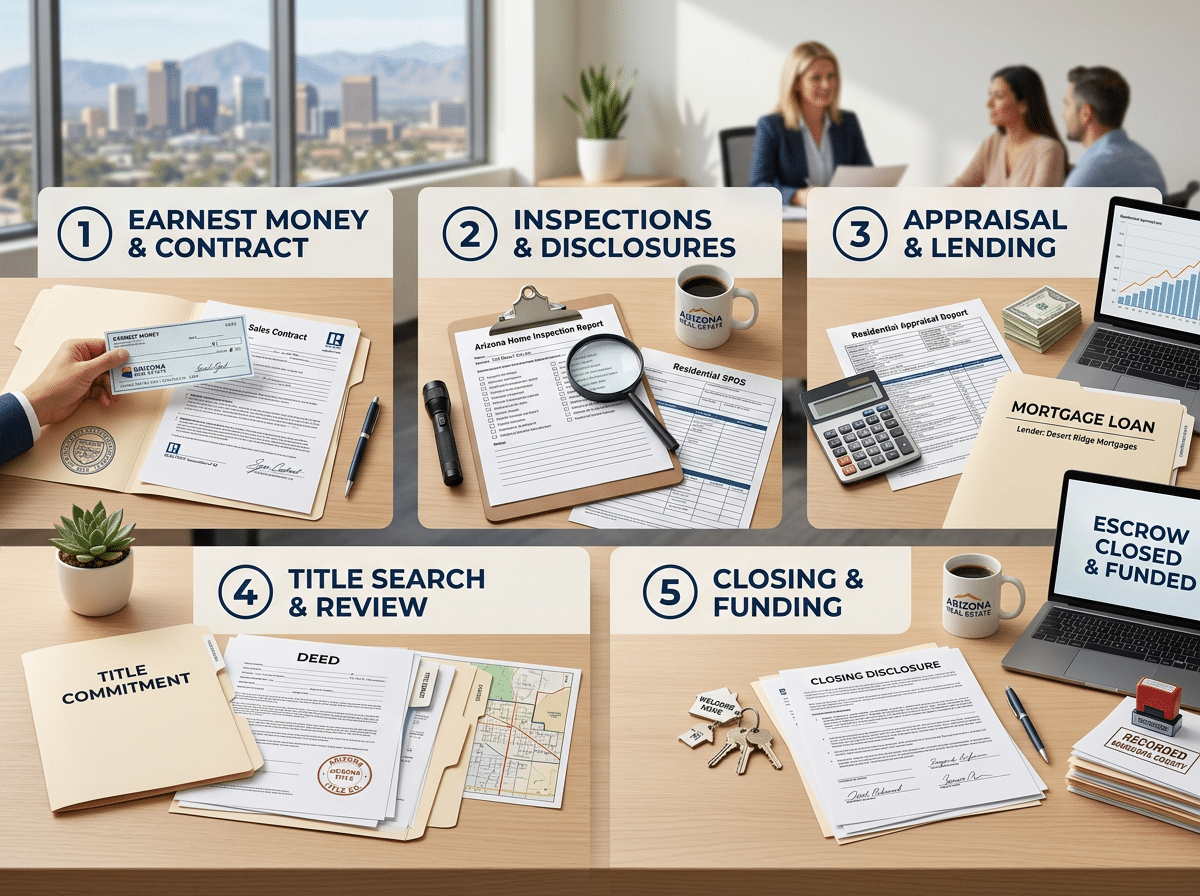
If you’re selling and buying, or relocating from out of state, planning matters. The Arizona home buying resources hub is a good place to understand timelines, inspections, and what to expect throughout the process.
FAQs: New construction vs resale for retirees in Arizona
Is new construction always lower maintenance?
It’s usually lower maintenance early on, but not “no maintenance.” Landscaping, HVAC servicing, and small fixes still happen—just with newer systems and often warranty coverage.
Are resale homes a bad idea because they’re older?
Not at all. A well-maintained resale home with a newer roof and HVAC can be an excellent retirement choice—especially if the location is more convenient for your daily life.
Which is better for energy bills in Arizona?
New construction often has an advantage due to insulation and newer HVAC, but a resale home with upgrades (windows, HVAC, roof improvements) can also perform very well.
What’s better for lock-and-leave living?
It depends on the community type, but many retirees find lock-and-leave options in resale condos/townhomes, particularly in prime areas. Always check HOA rules and what maintenance is included.
How do I decide if the location tradeoff is worth it?
Map drive times to your top “weekly life” needs: primary care, specialists, grocery, favorite restaurants, and family. If the drive times feel heavy, resale closer in may be worth it.
Bottom line: choose the home that supports your retirement lifestyle
For many retirees, new construction wins for simplicity, modern layouts, and early low maintenance. For others, resale wins for location, neighborhood feel, and the ability to see exactly what you’re buying today. The best choice is the one that makes daily life easier—errands, healthcare, hobbies, and comfort at home.
When you’re ready to compare real options, browse Arizona homes for sale and connect with West USA Realty for local guidance on neighborhoods, HOAs, and which home type fits your retirement plan best.