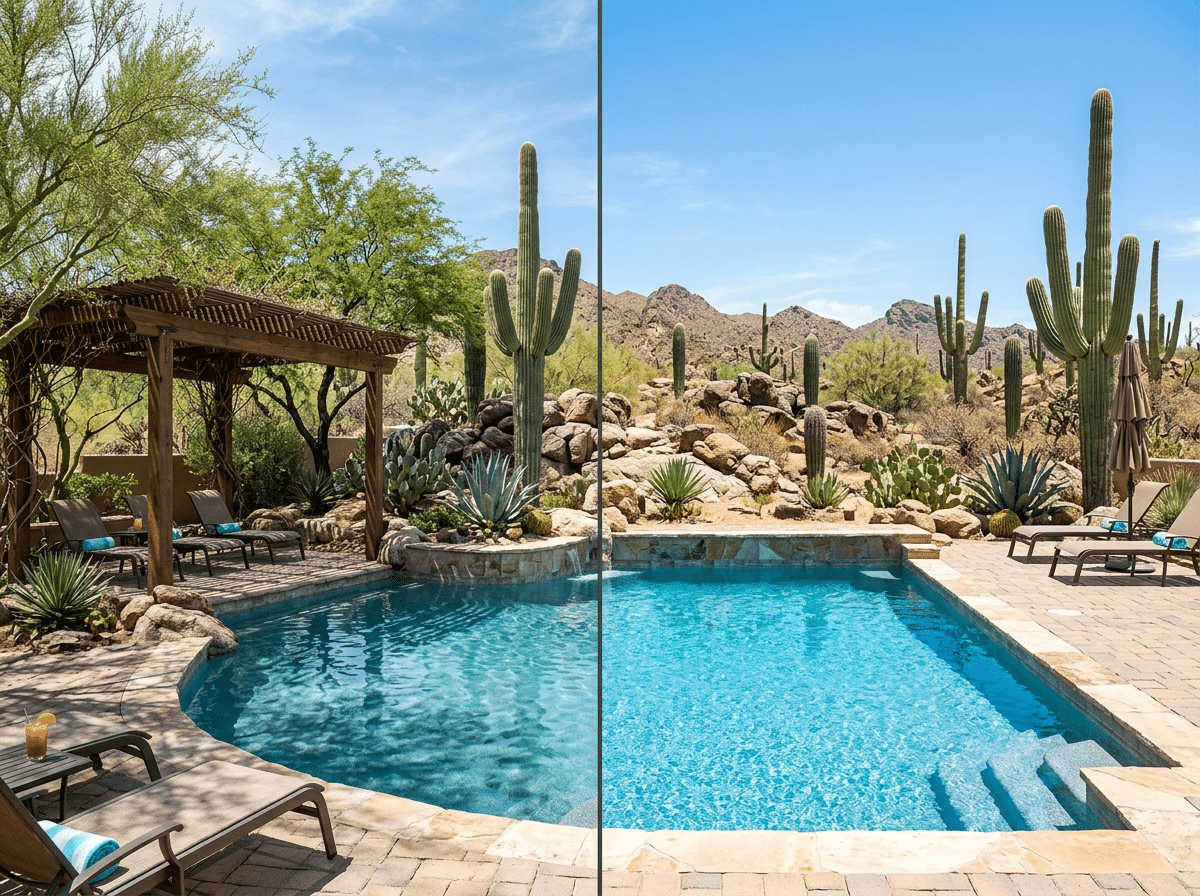
A backyard pool can be the best part of Arizona living—especially when you’re buying a pool home in Arizona and imagining summer weekends, evening swims, and a little relief from the heat. But pools also hide some of the most expensive surprises in a home purchase: aging equipment, underground leaks, worn surfaces, and outdated safety features.
This guide is built to help buyers separate a “pool home” from a “problem home” before they commit. If you’re shopping across the Valley, a local pro with West USA Realty can also help you ask the right questions early and keep the inspection timeline on track.
Why pools are common in Arizona (and why inspections matter more here)
Pools take a beating in the desert. Intense sun, long swim seasons, dust storms, and hard water all accelerate wear and tear. In many neighborhoods—especially across the Phoenix real estate market and parts of Scottsdale—pools are common enough that buyers may treat them as “normal.”
The risk is assuming “normal” means “no big deal.” In reality, pools combine:
- mechanical systems (pump, filter, heater),
- structural components (shell, decking),
- plumbing (often buried and hard to see),
- and ongoing utility costs (electricity + water).
A pool can be a lifestyle upgrade, but only if you know what you’re inheriting.
Pre-offer questions that can save you time (and money)
Before you write an offer—or at least before your inspection period starts—ask these questions:
- Is the pool currently operational? (Not “was it used last year?”)
- How old are the pump, filter, and heater?
- Is it chlorine or saltwater? (Saltwater still uses chlorine, but the equipment and maintenance can differ.)
- When was the pool surface last resurfaced? (Plaster/pebble finishes don’t last forever.)
- Any known leak history or repairs?
- Is there a pool service company? If yes, ask for service records.
- Are there any pool-related HOA rules? (Some communities limit changes, heating equipment, or fencing styles.)
While you’ll confirm details during due diligence, these questions help you spot obvious red flags early.
Pool equipment checklist: what to inspect and why it matters
Pool equipment is where many “surprise” costs live. Even if the pool looks beautiful, the equipment pad may be telling a different story.
Pump
- Listen for loud whining, grinding, or rattling
- Check if it’s a variable-speed pump (often more energy-efficient than single-speed models)
- Look for leaks around fittings and seals
Buyer mindset: A struggling pump might still “run,” but replacement can be a significant expense.
Filter (cartridge, DE, or sand)
- Ask what type it is and how it’s maintained
- Look for cracked housings, old pressure gauges, or signs of chronic leaks
- If it’s a cartridge filter, find out when cartridges were last replaced/cleaned
Heater or heat pump (if included)
- Turn it on during inspection if possible
- Confirm it actually heats (not just “the buttons work”)
- Ask about age and recent maintenance
Salt system (if applicable)
- Ask for the age of the salt cell (cells wear out)
- Look for corrosion on equipment or metal components nearby
- Confirm the system is properly bonded/grounded (your inspector can advise)
Automation, timers, and lights
- Test pool lights and any automation controls
- Make sure the system can schedule filtration and cleaning reliably
Pro tip: A dedicated pool inspection is usually worth it. A general home inspector may note obvious issues, but a pool specialist can better evaluate equipment health, surface wear, and operational performance.
Surface and structure: how to spot wear before it becomes a renovation
Pool surfaces can be deceptive in listing photos. Sun glare and water color can hide problems.
Common pool finishes (and what to look for)
- Plaster: can become rough, stained, or mottled over time
- Pebble finishes: tend to last longer, but can still wear, discolor, or become uneven
Red flags to watch for
- Roughness that scrapes feet or swimsuits
- Widespread discoloration that doesn’t look like normal staining
- Cracks (especially long, continuous cracks)
- Missing tiles, loose coping, or crumbling grout
Decking and coping
- Look for trip hazards, separation, or major settling
- Watch for cracks that appear to be expanding or shifting
- Check drainage direction—does water run toward the pool, toward the home, or away properly?
Some cracking is common, especially in older homes, but you want an inspector to help distinguish cosmetic issues from structural concerns.
Leaks: the “quiet” problem that gets expensive fast
Leaks are one of the biggest concerns in Arizona pool ownership because they can drive up water bills and damage surrounding soil or structures.
Signs a pool might be leaking
- The seller mentions adding water “often” (more than typical evaporation)
- Constantly low water level with no clear explanation
- Soggy soil, algae blooms in odd areas, or persistent wet spots near the pool or equipment pad
- Air bubbles in the returns or trouble keeping the pump primed
Important: Arizona evaporation is real, so you’re looking for patterns that seem excessive, not a small daily drop. If anything feels off, ask for a leak test during your inspection window.
Safety and barriers: don’t assume it’s compliant
Pool safety isn’t just about kids—barriers protect guests, pets, and future resale. Requirements can vary by city and situation, so rather than assuming anything, confirm what’s there and whether it’s properly installed.
Safety items to check
- Fencing condition and gate function (self-closing/self-latching where required)
- Door alarms (when applicable)
- Pool cover (if included) and whether it’s functional
- Visibility and access points (is the pool area secure?)
Even if you don’t have children, future buyers might—and safety features can affect both comfort and marketability.
Permits and modifications: especially important with older pools
Pools sometimes get upgraded over time: added heaters, new pumps, resurfacing, deck changes, water features, or even conversions (like diving pool changes). Not every update is done properly.
Ask for:
- receipts and installer info for major work,
- any documentation the seller has for renovations,
- confirmation of what conveys (robot cleaners, removable fences, etc.).
If you’re uncertain about whether something was permitted or done professionally, your agent can help you request clarity during escrow.
Utility costs: what buyers should budget for in Arizona
Owning a pool usually means:
- electricity for filtration, cleaning, and possibly heating,
- water for evaporation and maintenance (backwashing, refills, balancing).
Costs vary widely based on:
- pool size,
- pump type and run time,
- shade vs full sun,
- water temperature habits,
- and whether there’s a heater.
Quick “real life” considerations
- Pools in full sun often need more water and can stress surfaces faster.
- A variable-speed pump can reduce operating costs compared to older setups.
- If you plan to heat the pool, clarify the type of heater and expected usage.
A smart move is asking for recent utility bills (or at least the seller’s typical run schedule and service costs) to help you plan.
HOAs and neighborhood rules: don’t skip this step
In some communities, HOAs have rules about:
- fencing styles and heights,
- visible equipment,
- exterior changes,
- and even certain upgrades.
If you’re buying in a planned community—like many areas around Queen Creek—get the HOA documents early and scan for pool-related restrictions during your review period.
How pool issues show up in the inspection negotiation
Your inspection isn’t only about identifying problems—it’s about deciding what you can live with and what should be addressed before closing.
Common negotiation paths
- Seller repairs (preferred for safety or operational items)
- Seller credit (common for equipment nearing end-of-life)
- Price adjustment (sometimes used when multiple items stack up)
- Buyer accepts as-is (but only with eyes open)
A big part of this process is documenting issues properly and responding on time. The Arizona BINSR process is the framework most buyers use to request repairs or concessions after inspections.
Seller disclosures: what to look for (and what to verify)
Sellers typically complete disclosures about what they know regarding the home—including the pool. Read those carefully, and compare them against:
- inspection findings,
- visible conditions,
- service records (if provided).
The Arizona SPDS overview is helpful if you want to understand what disclosures do (and don’t) cover. Disclosures are important, but they aren’t a substitute for inspections.
A practical “pool home” scorecard for buyers
If you want a fast way to evaluate a pool home during showings, use this simple scorecard:
Green flags
- Equipment pad looks clean, organized, and recently maintained
- Variable-speed pump and updated filter system
- Seller has service records and can answer basic questions
- Surface feels smooth and consistent, with minimal staining
- Decking is stable with safe drainage and no major trip hazards
Yellow flags (not a dealbreaker, but investigate)
- Pool looks great but equipment is clearly older
- No service history and vague answers about maintenance
- Minor cracking in decking or visible wear in the surface
- Heater exists but “hasn’t been used in years”
Red flags
- Pool is empty, green, or not operational (without a clear plan)
- Signs of persistent leaks or significant cracking
- Electrical concerns at equipment pad (unsafe wiring, corrosion, etc.)
- Unclear ownership of equipment or missing documentation for major work
Shopping for the right pool home in the Valley
If you’re still looking, it helps to filter by pool features and compare neighborhoods. Start by browsing Arizona homes for sale and track each home’s pool condition notes the same way you track roof age or HVAC age.
If you’re buying for the first time (or want to brush up on timelines, contingencies, and what happens after acceptance), the West USA buyer resource hub is a strong place to start.
FAQs
Should I always get a separate pool inspection in Arizona?
If the home has a pool, a dedicated pool inspection is often a smart add-on because it evaluates equipment operation, surface condition, and leak indicators more thoroughly than a general inspection.
Are saltwater pools “maintenance-free”?
No. Saltwater pools still use chlorine (generated by a salt cell). They can be easier for some owners, but equipment, water balance, and component wear still matter.
What’s the biggest pool-related surprise for buyers?
Aging equipment and hidden leaks are common surprises because the pool can look great while expensive components are near the end of their life.
Can I ask the seller to repair or replace pool equipment?
Often yes—through the inspection negotiation process. Outcomes vary by market conditions and the severity of the issue.
Do pools add value in Arizona?
Sometimes, especially in neighborhoods where pools are common and properly maintained. Condition, operating cost, and quality of the pool setup matter more than “pool vs no pool.”
Final thought: make sure it’s a pool lifestyle—not a pool liability
A well-maintained pool can make Arizona summers far more enjoyable. But when you’re buying a pool home in Arizona, the smartest move is treating the pool like a major system—just like the roof or HVAC—so you understand condition, remaining life, and true ownership costs before you commit.
If you’d like help evaluating pool homes across the Valley, connect with West USA Realty for local guidance on neighborhoods, inspections, and negotiation strategy. And when you’re ready to tour, you can narrow options quickly by browsing Arizona homes for sale.